Bike Service History: The Paper Trail That Sells for More

•8 min read
Quick answer: Used bikes are priced by condition grade, and the grade is set by what the seller can prove. BicycleBlueBook data (analysed by Singletracks, updated 2024) puts first-year depreciation at 38% in excellent condition versus 62% in fair — on a €4,000 bike, that grading spread is roughly €950. A service history — component ages in km, service records, receipts — is how a seller earns the top grade instead of being argued down to the bottom one. Buyers: the five questions to ask are below.
When you sell a car, the stamped service book does half the negotiating for you. Oil changes on schedule, timing belt at the right interval, receipts in a folder — the buyer can see the car was cared for, and the price reflects it. That effect is measured: in a 2018 HPI analysis of service-history value, a car with no history was worth up to 40% less than the same car with full records. Buyers surveyed expected a 19% discount on average.
When you sell a bike, the listing says "well maintained, always stored indoors" and the buyer has no way to check any of it. So they show up with a chain checker, squeeze the brakes, spin the cranks, and guess at everything else. Every guess goes in one direction: against your asking price.
I'll say it: a €4,000 bike with no service history is a discounted bike with extra steps. The buyer can't verify the drivetrain, the bearings, or the suspension service, so they price in the worst case for all three — and the condition-grade data says that discount is real money. In the Singletracks analysis of BicycleBlueBook data (last updated 2024), the gap between an "excellent" and a "fair" grade in year one was 24 points of original price. Documentation is what separates the grades, and keeping it costs nearly nothing.
Understand What the Buyer Is Actually Pricing
A used-bike buyer isn't paying for your bike. They're paying for your bike minus everything they might have to replace in the first three months. Unknown chain wear means a possible chain + cassette + chainring bill. An unknown suspension service date means a possible full damper service. Unknown bearings mean a bottom bracket, headset, and hubs of unclear age.
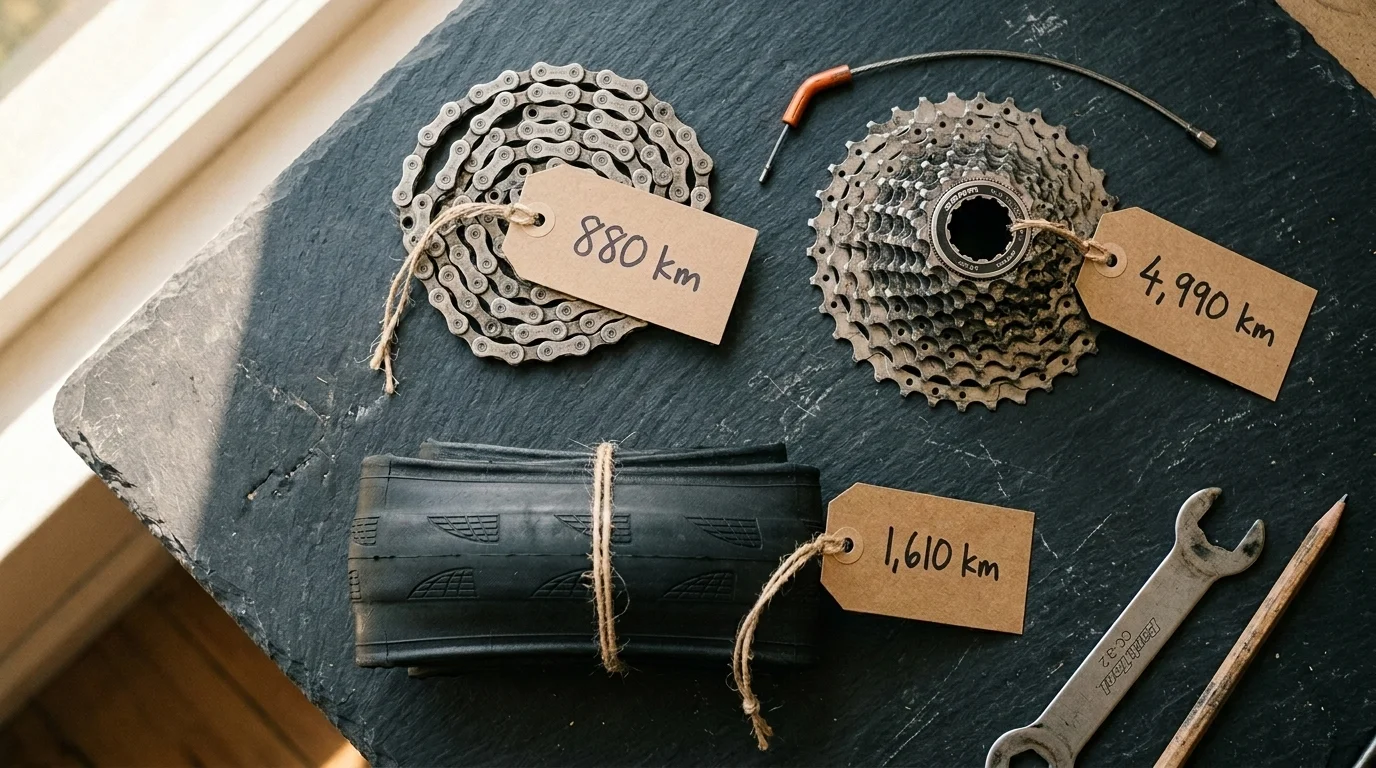
None of those items are visible in a car-park inspection. That's the whole problem — and the whole opportunity. What each of those parts should last is in the component lifespan chart; a seller who can show where each part sits on that chart removes the guesswork the discount is built on.
Compare: What Buyers Check vs What a History Answers
| What the buyer checks in the car park | What a service history answers instead |
|---|---|
| Chain checker in the top gear | Chain km since install, plus the last two replacement dates |
| Squeeze the levers, eyeball the pads | Pad replacement dates and the last brake bleed |
| Spin the wheels, look at tire crown | Tire model, install date, and km on the current set |
| Wiggle the cranks and headset | Bearing service and replacement records |
| Compress the fork, listen | Lowers/air-can service dates against the manufacturer interval |
| Look for paint damage | Crash notes and what was inspected or replaced afterwards |
| Ask "how many kilometres?" | A Strava-synced odometer — total and per component |
The left column is a 10-minute inspection that can only find problems. The right column is evidence that problems were handled before they existed.
Buyers: Ask These 5 Questions
- How many kilometres on the bike — and on this specific chain and cassette? "About 5,000" for the bike tells you little; the drivetrain km is where the money is.
- When were the bearings last serviced or replaced? Bottom bracket, headset, hubs. No wear indicator exists for any of them, so records are the only answer that means anything.
- If it has suspension or a dropper: when was the last service? Manufacturer intervals are short — RockShox specifies a lower-leg service every 50 riding hours and a damper service every 200, and Fox recommends a full service every 125 hours or yearly — so years of "it feels fine" is a pending bill.
- Has it been crashed? Follow-up: what was inspected or replaced afterwards? Hesitation here is information.
- Can you show me any of that? Receipts, a shop invoice, a maintenance log, a tracking app. A seller with nothing isn't lying, but you should price as if you can't tell.
A seller who answers all five with evidence has earned the asking price. A seller who answers none has told you which condition grade applies.
Sellers: Build the Service History Before You Need It
You can't reconstruct a service history the week you list the bike. What you can do, starting today:
- Track kilometres per component, not per bike. "New cassette 1,200 km ago" is a selling point; "I replaced it at some point" is not.
- Log every service with a date — your own work counts, not just shop visits. A dated logbook entry beats a memory.
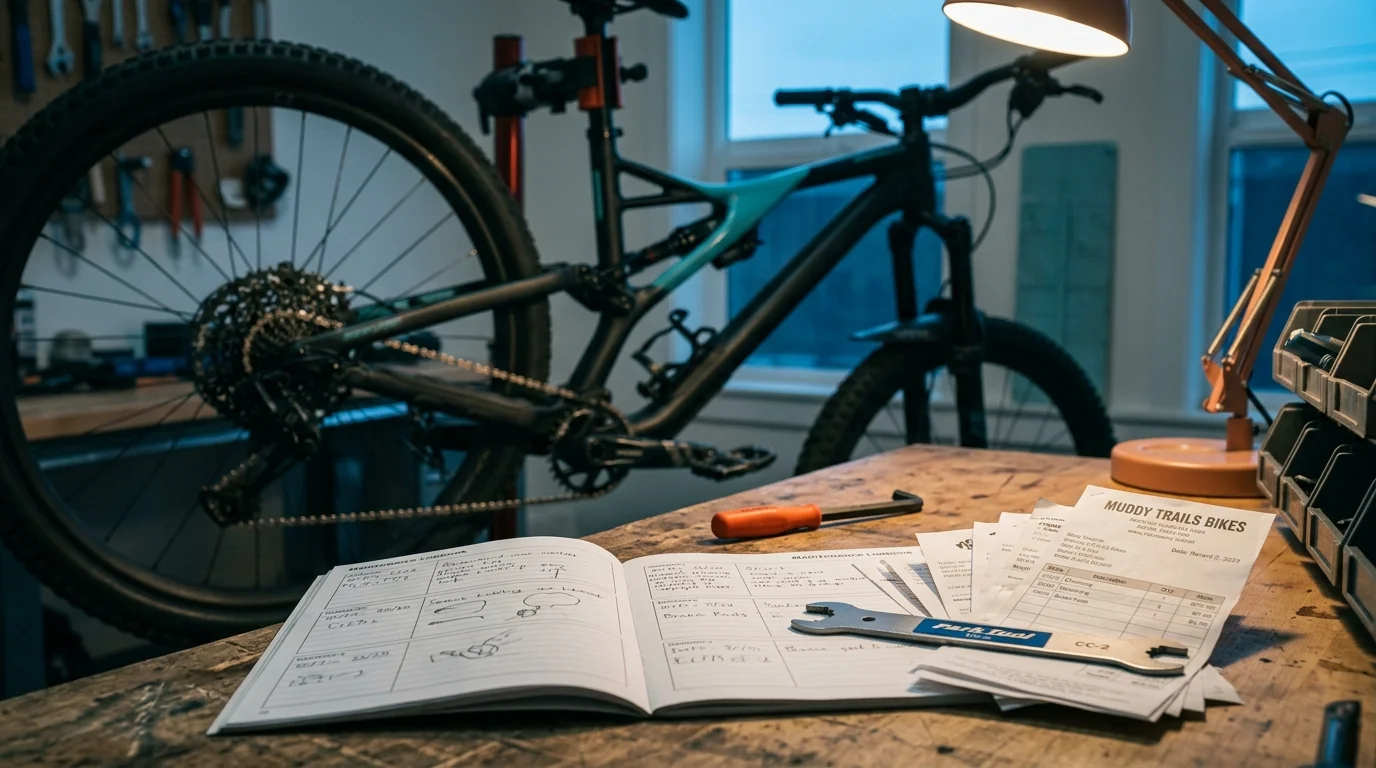
- Keep receipts in one place. Parts and shop invoices establish both the spend and the timeline. The maintenance habit pays twice: it already saves money while you own the bike, then again at sale time.
- Photograph the bike clean, with close-ups of the usual damage zones: driveside chainstay, downtube, rim/rotor surfaces.
If that sounds like homework, it's the same digital maintenance log you'd keep anyway — the resale value is a side effect.
My own receipt: I bought my Cannondale Scalpel second-hand on buycycle. The model year was easy — it's in the listing, it's on the frame. The mileage wasn't. Not the bike's, and not a single component's: the drivetrain, the suspension, the bearings were all whatever the seller remembered. I bought it anyway, but every one of those unknowns was an argument against the asking price. A per-component odometer I could actually check would have convinced me faster than any amount of "barely ridden".
How WatchMy.Bike Makes This Automatic
WatchMy.bike builds the paper trail while you ride. Strava sync keeps a per-component odometer running, every service lands in the logbook with a date, and receipts attach to the bike or component they belong to (paid plans). When it's time to sell, publish the bike's public profile — the full build with per-component kilometres at watchmy.bike/p/yourname — and put the link straight in your listing. The buyer's five questions are answered before they ask.
Transferable bike profiles are on the roadmap: when the sale closes, you'll hand the buyer a link and the bike — components, kilometres, service history and all — moves into their garage, whether they're new to WatchMy.bike or already have an account. The paper trail won't just sell the bike; it will come with it.
Set up these alerts and the history writes itself:
- "Measure chain wear" — recurring every 1,000 km, so every chain replacement is on record
- "Fork lowers service" — recurring every 50 riding hours, the interval buyers ask about most
- "Annual bearing check" — recurring every 12 months, the question almost no seller can answer
Set up your first maintenance alert →
FAQ
How much more does a documented bike sell for?
The spread sits between condition grades. In the BicycleBlueBook data analysed by Singletracks, bikes in excellent condition lost 38% of their value in year one against 62% in fair condition — on a €4,000 bike, that grading gap is roughly €950. A service history is the evidence that earns the higher grade instead of leaving it to the buyer's imagination.
What should a bike service history include?
Kilometres per component (not just the bike's total), dated service records — your own work counts, not only shop visits — receipts for parts and labour, and crash notes with what was inspected or replaced afterwards. Photos of the clean bike, including the usual damage zones, complete the file.
Can I start a service history on a bike I've owned for years?
Yes, and a partial history still beats none. You can't reconstruct services you never wrote down, but ride history from Strava can rebuild total and per-component distances retroactively, and any receipts you've kept establish the timeline. Start logging today and every entry from here on is evidence.
Questions about selling or buying with a service history? Reach out at marien@WatchMy.Bike.