What Does Your Bike Actually Cost Per Kilometre?
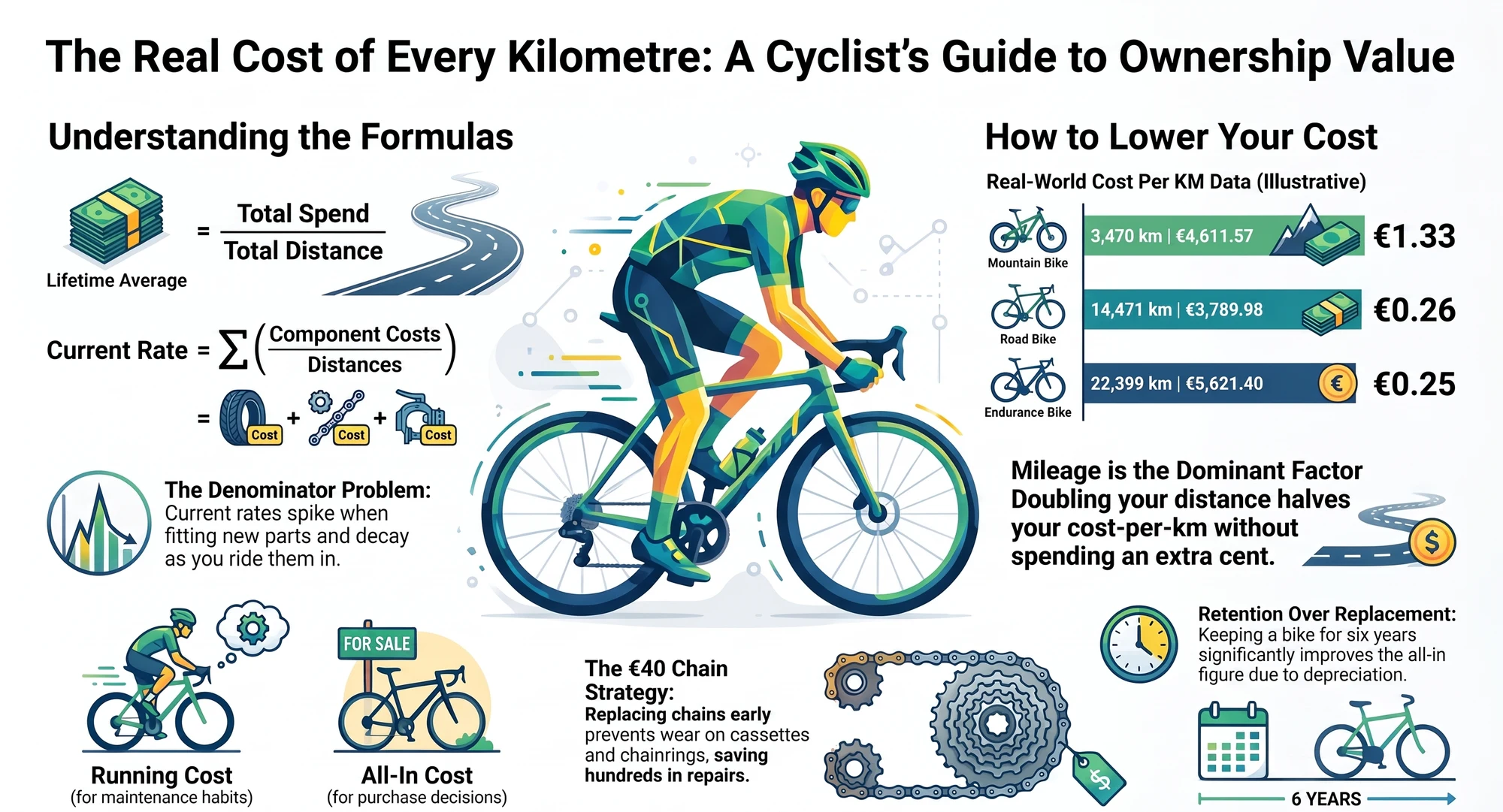
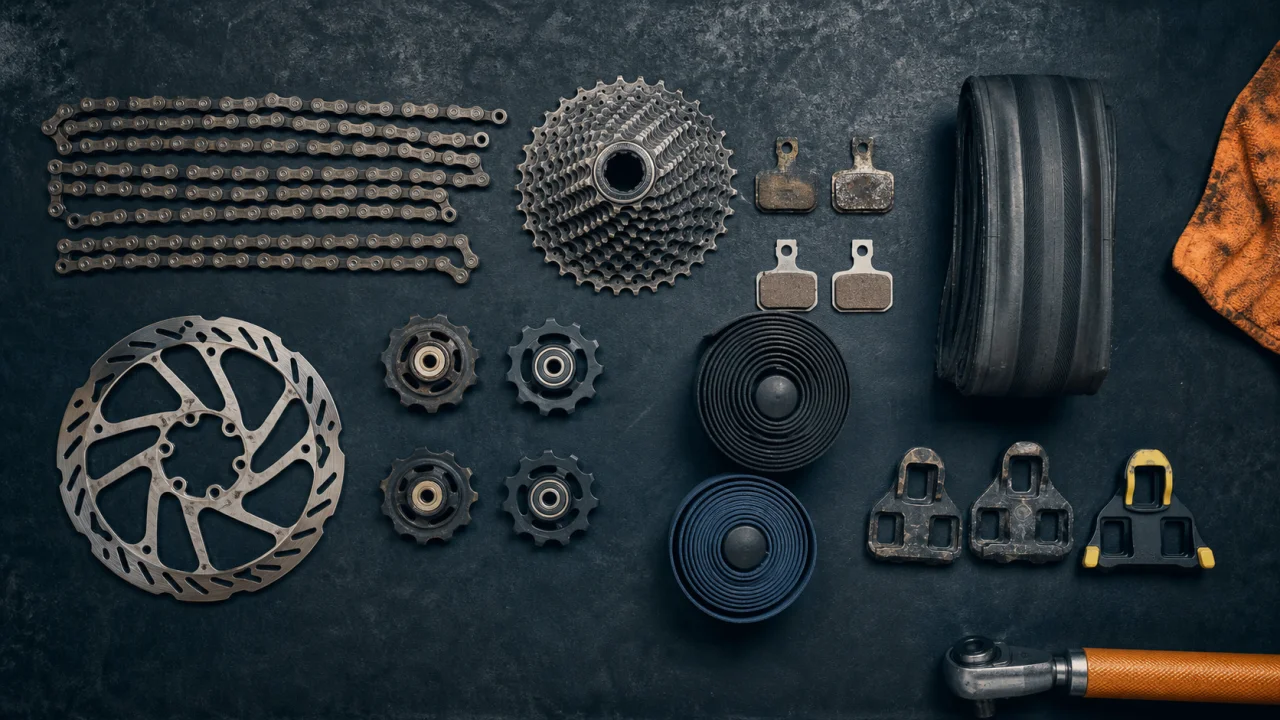
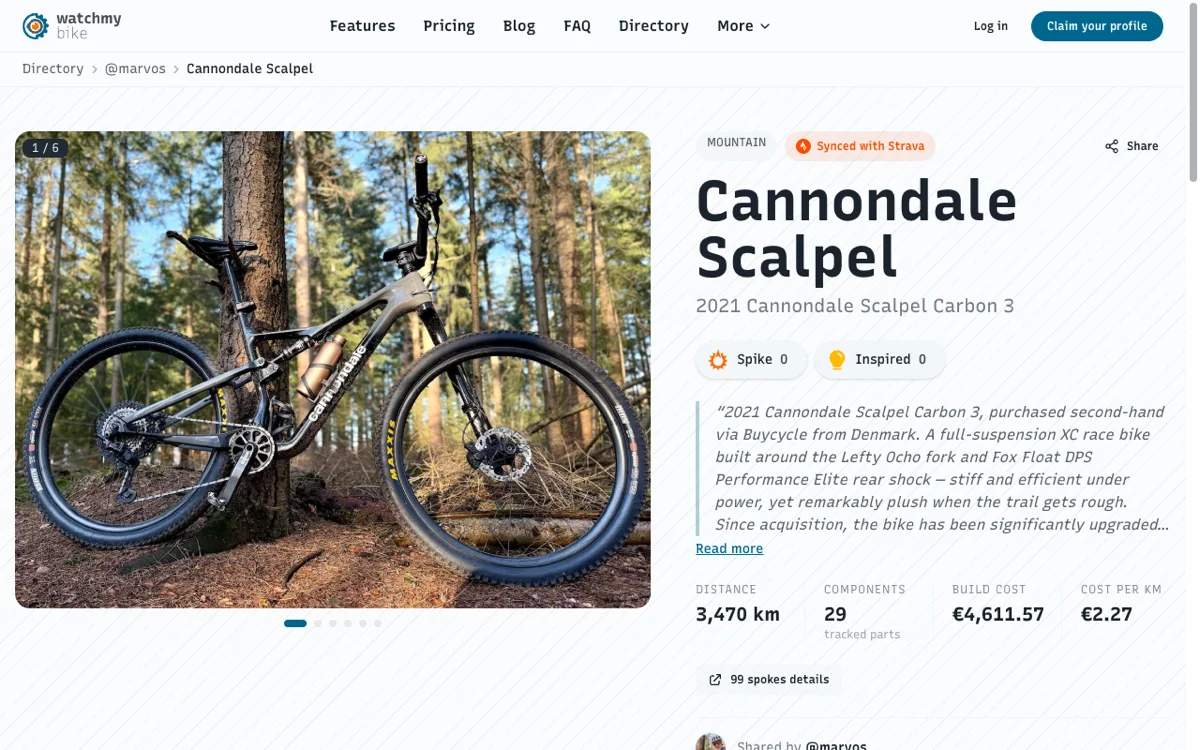
My mountain bike costs €1.33 per km as a lifetime average and €2.27 by the sum of its parts. Both are right. The formula, which denominator to use, and why riding more beats buying cheaper.
Cycling maintenance tips, gear tracking guides, and updates from the WatchMy.bike team.

My mountain bike costs €1.33 per km as a lifetime average and €2.27 by the sum of its parts. Both are right. The formula, which denominator to use, and why riding more beats buying cheaper.

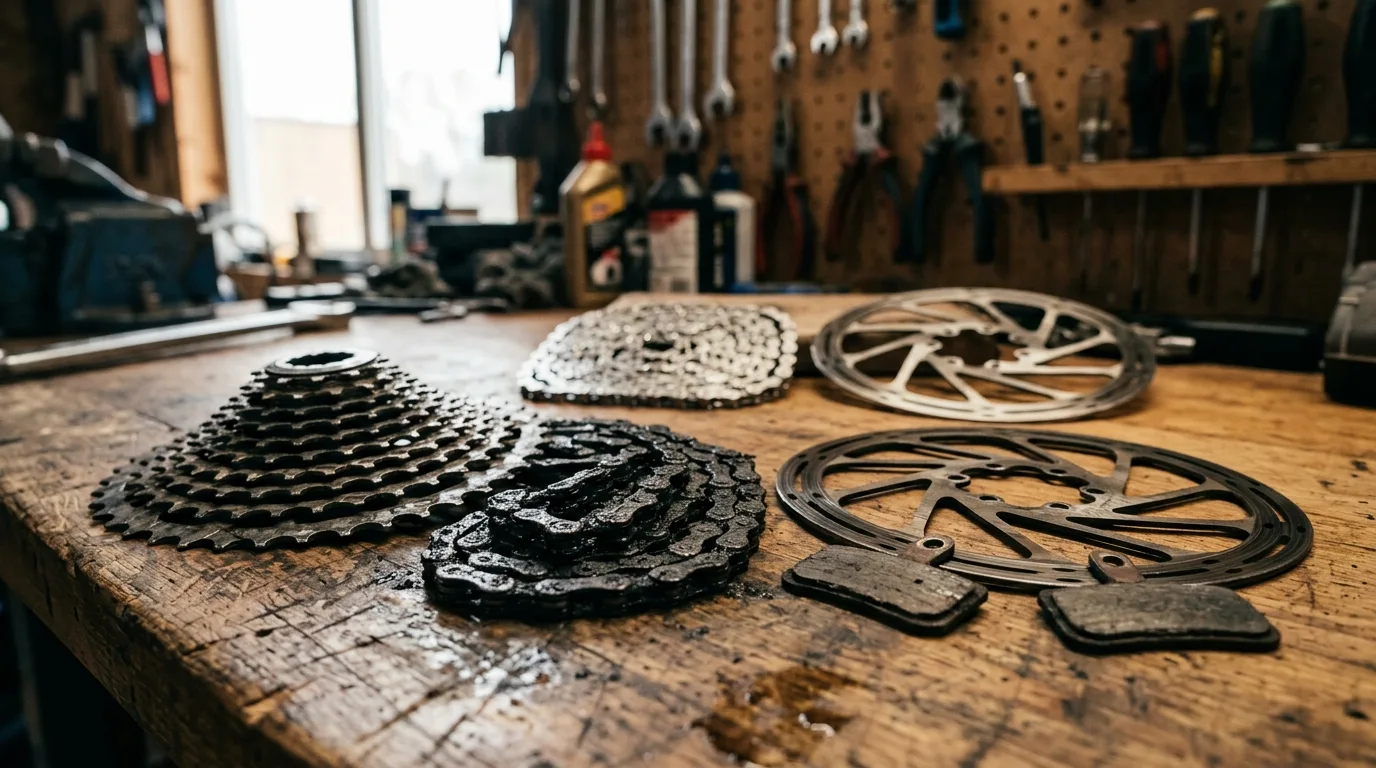
What skipped repairs really cost: three cascade failures with EU price ranges, and the annual maintenance math for a 4,000 km/year rider — prevent vs repair.

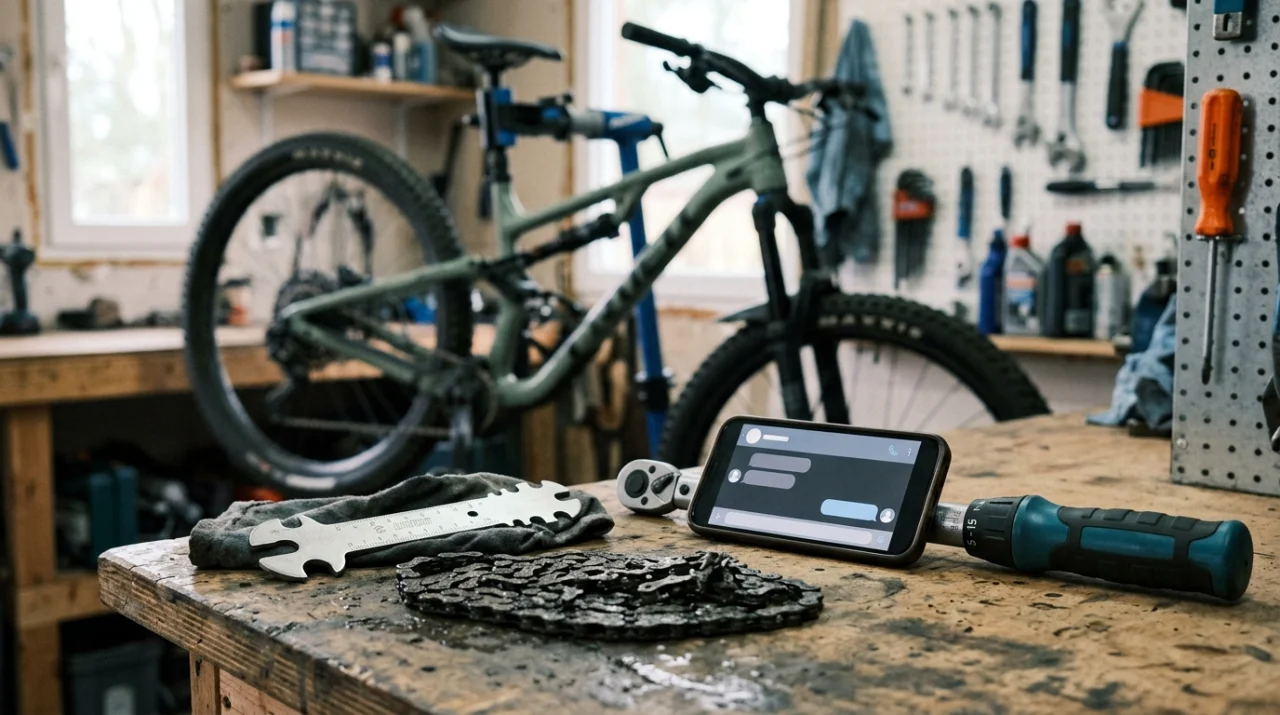
The starter set of bike maintenance alerts: six reminders with exact intervals — chain at 1,000 km, sealant every 3 months, brake fluid yearly — set right.

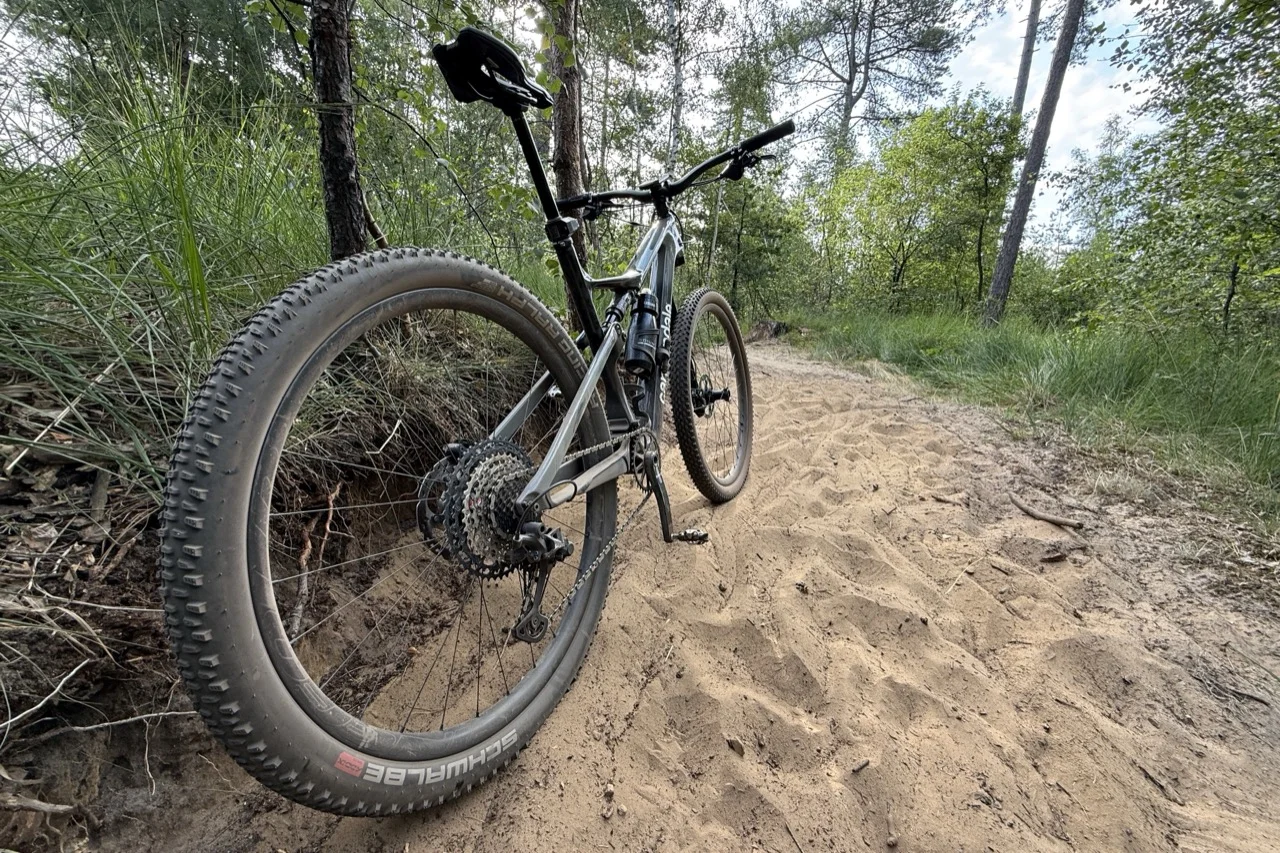
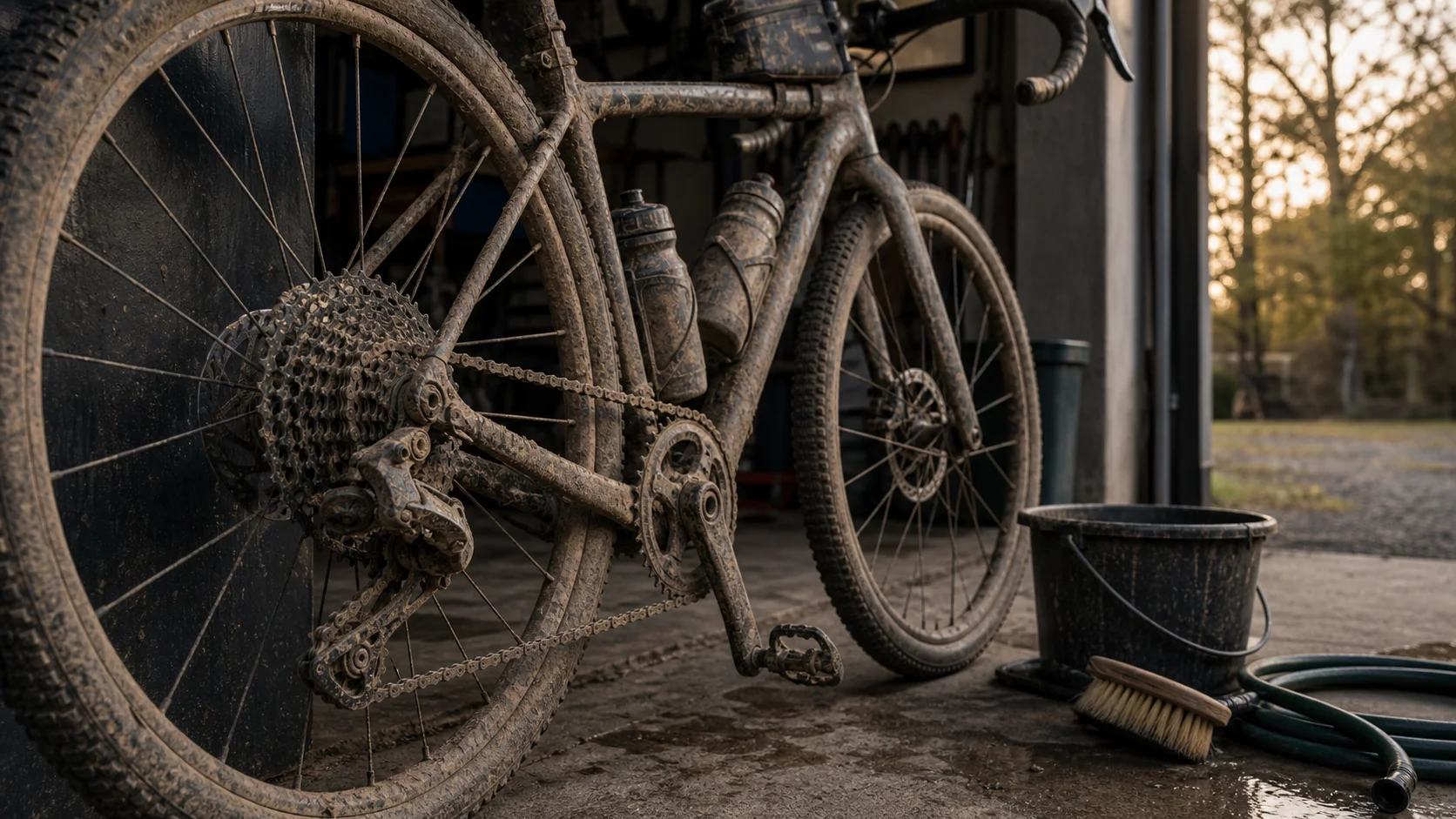
How to ride loose, dusty sand without fighting the drift — plus why a dry summer is harder on your bike than a wet winter, and the service intervals dust quietly shortens.

Cloudflare Workers, Supabase, webhook-first Strava sync with a 6-hour cron backstop, and MCP for AI assistants. The architecture one person can actually run.

First-year bike depreciation: 38% in excellent condition vs 62% in fair (BicycleBlueBook). How a service history earns the top grade — plus 5 buyer questions.

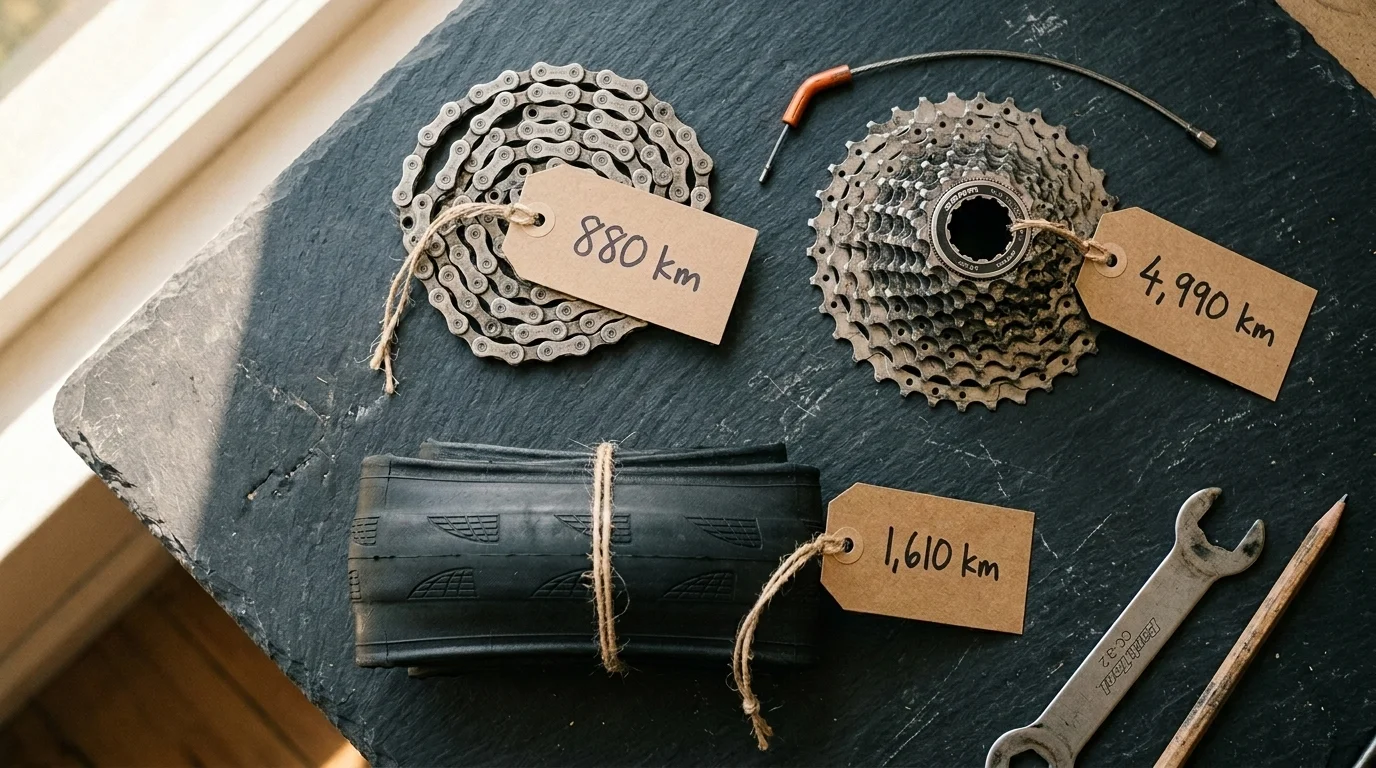
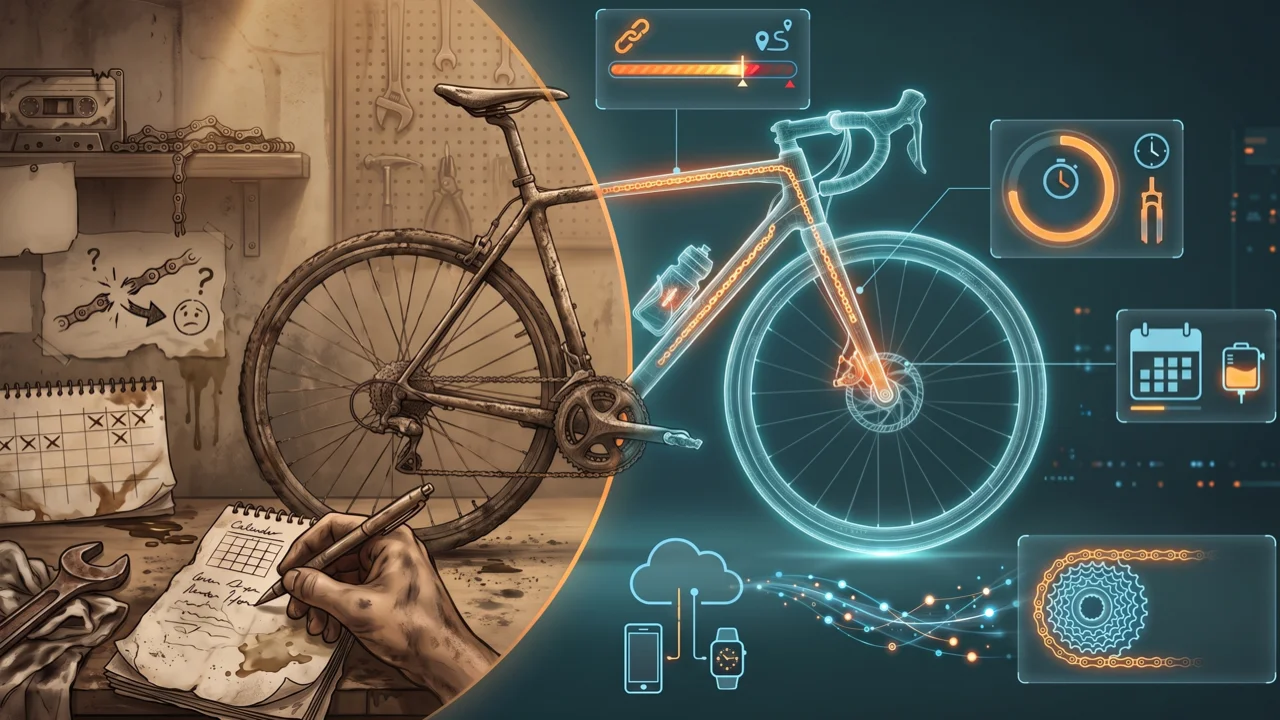
Your bike's total km are not your chain's km. Four ways to track per-component mileage — paper, spreadsheet, Strava, dedicated tracker — and where each breaks.
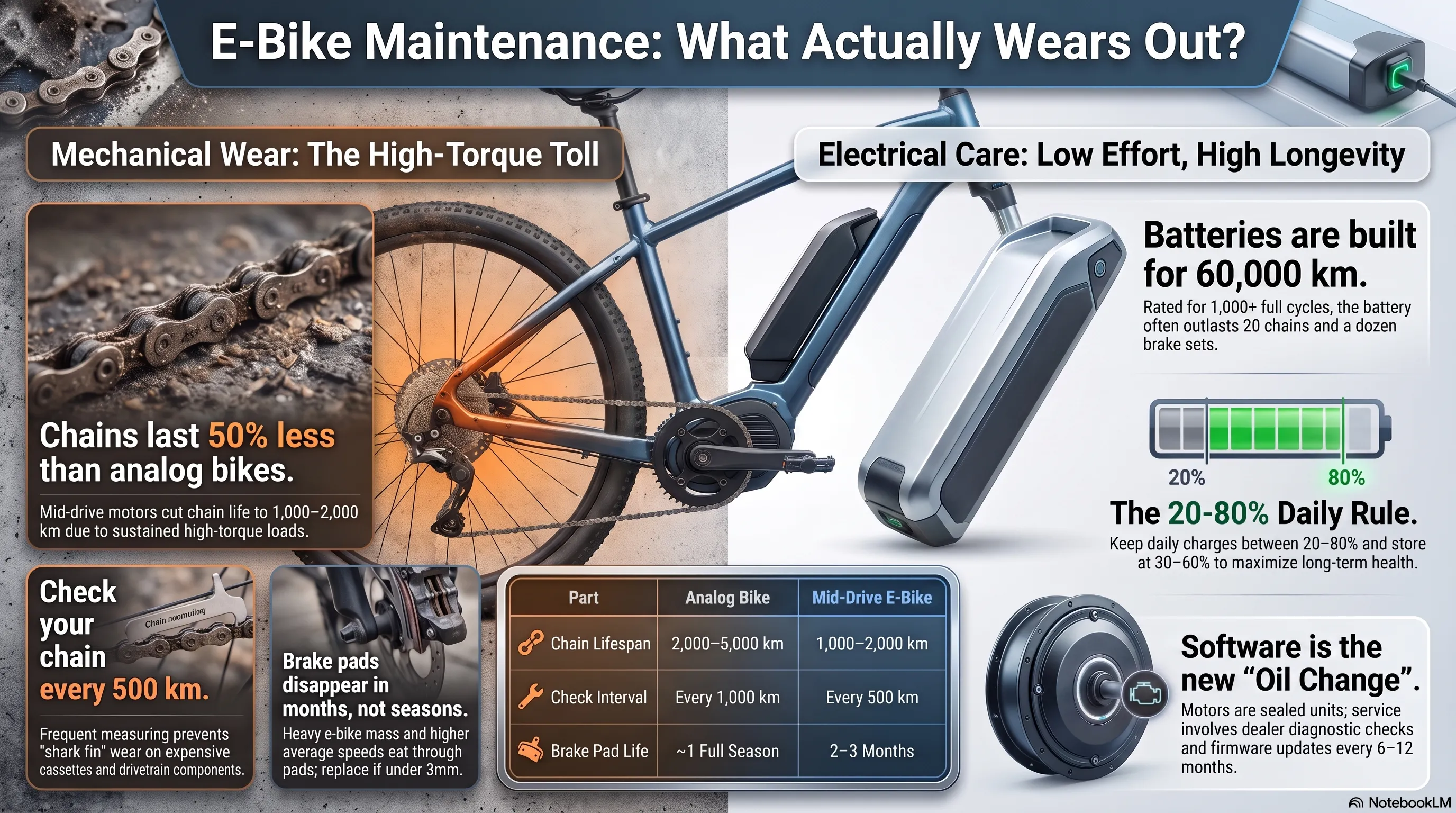
What actually wears on an e-bike: chains at 1,000–2,000 km on mid-drives, pads eaten by mass and speed, a motor you never open, plus battery care in 3 rules.

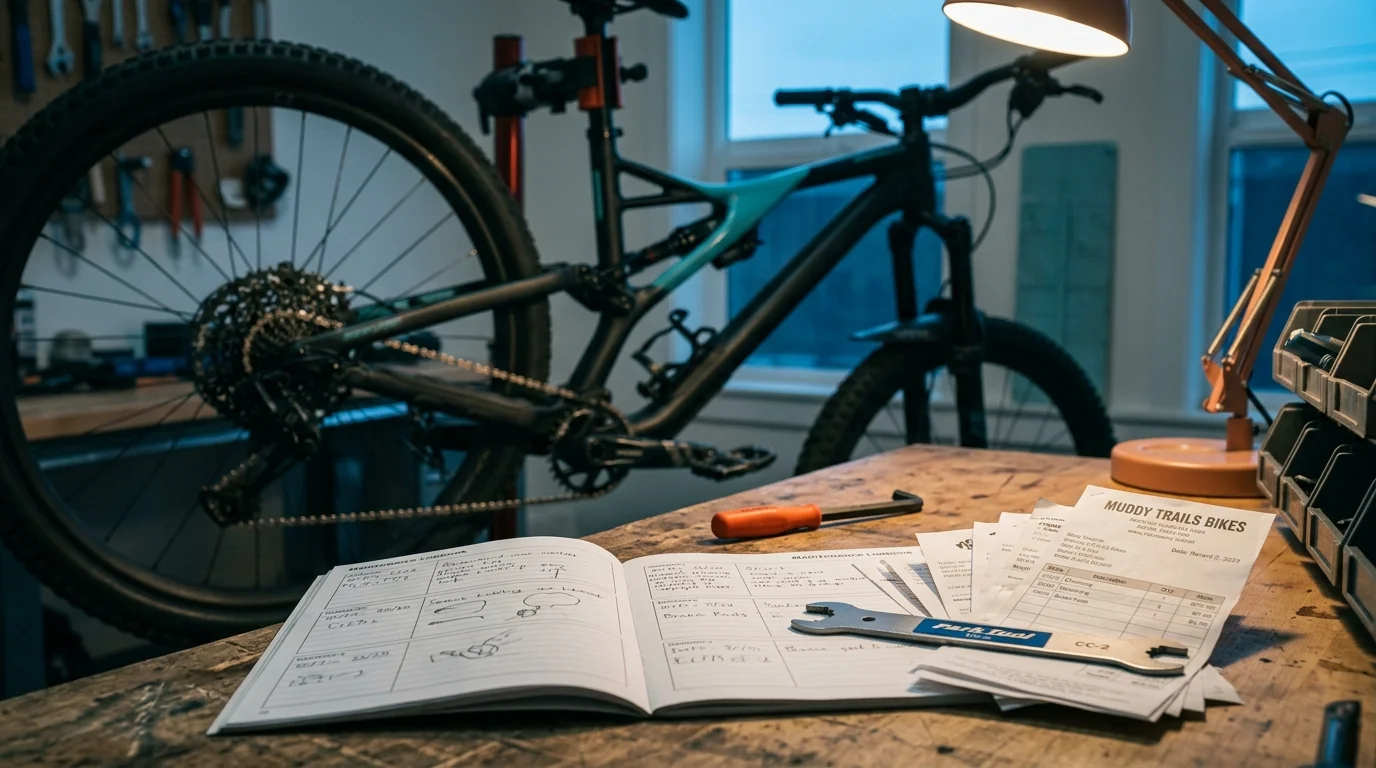
What a digital bike maintenance log is, how to choose an app that you won't abandon by February, the data worth keeping, and how WatchMy.bike keeps the log current from your Strava rides.

Gravel doesn't need different maintenance — it needs road intervals cut by conditions. Chain checks every 500 km, sealant every 3 months, bearings yearly.

A distance-based road bike service schedule: what to check every ride, every 500 km, every 1,000 km, and each season — plus the two items that run on a clock.

A condition-adjusted lifespan chart for every wearing part — chains, cassettes, tires, pads, bearings — with honest multipliers for wet, e-bikes, and weight.

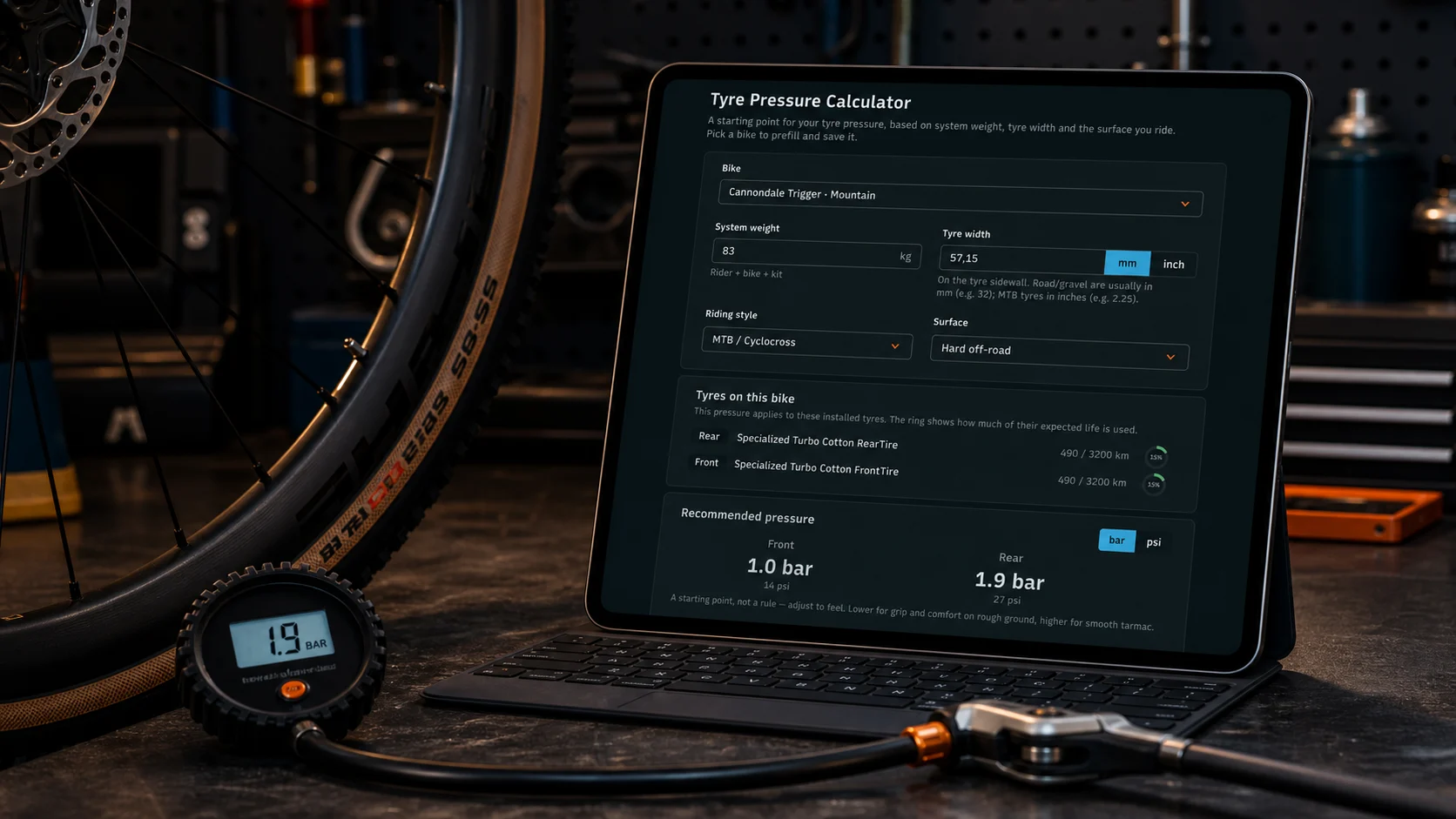
A tire pressure calculator that already knows your bike: it prefills weight, tyre width and surface from your setup, then saves the result per bike.

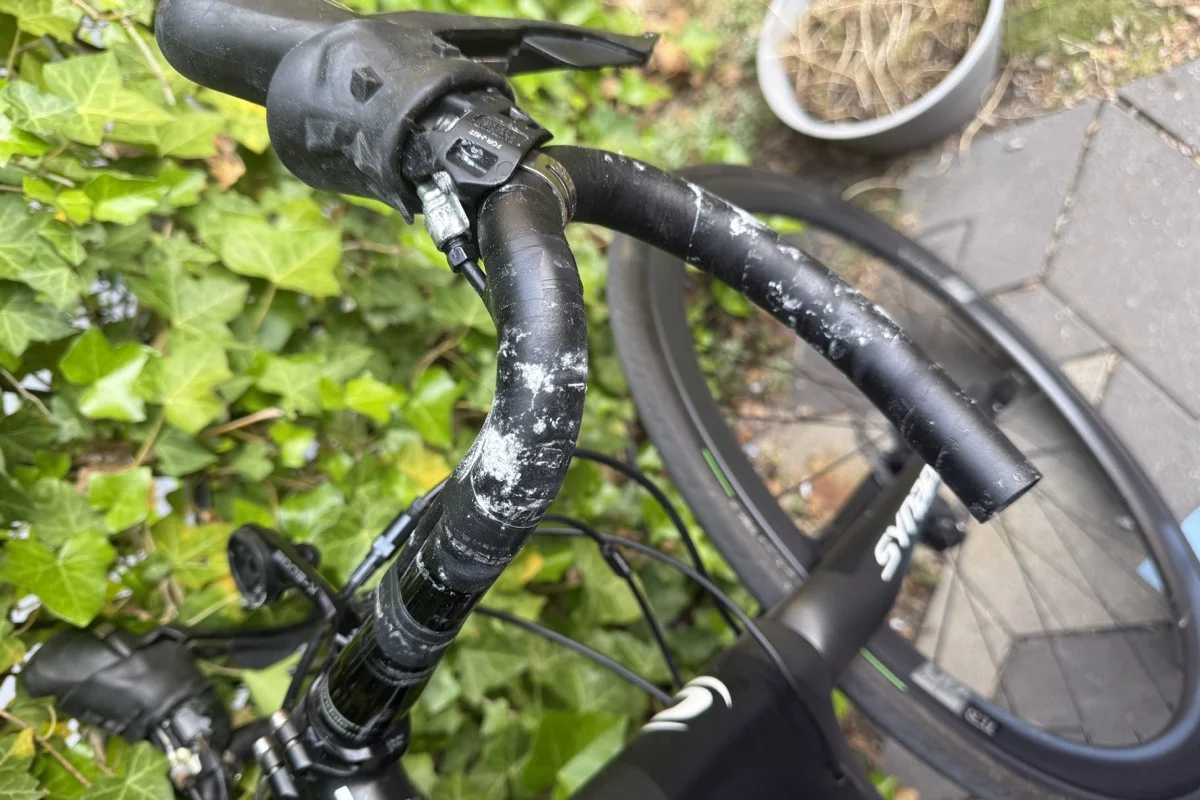
Bar tape is one of three places your body touches the bike, yet it's replaced last. When worn tape costs you grip, and how to wrap drop bars in 20 minutes.

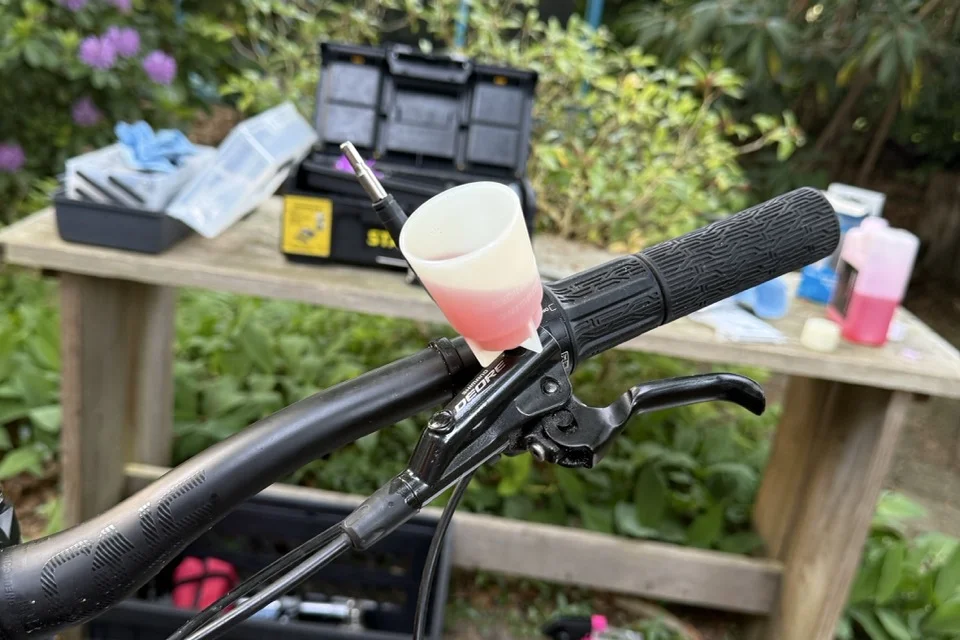
Hydraulic brakes feel firm until they don't. Mineral oil vs DOT, how to spot a brake that needs bleeding, how often to change fluid, and how to bleed it.

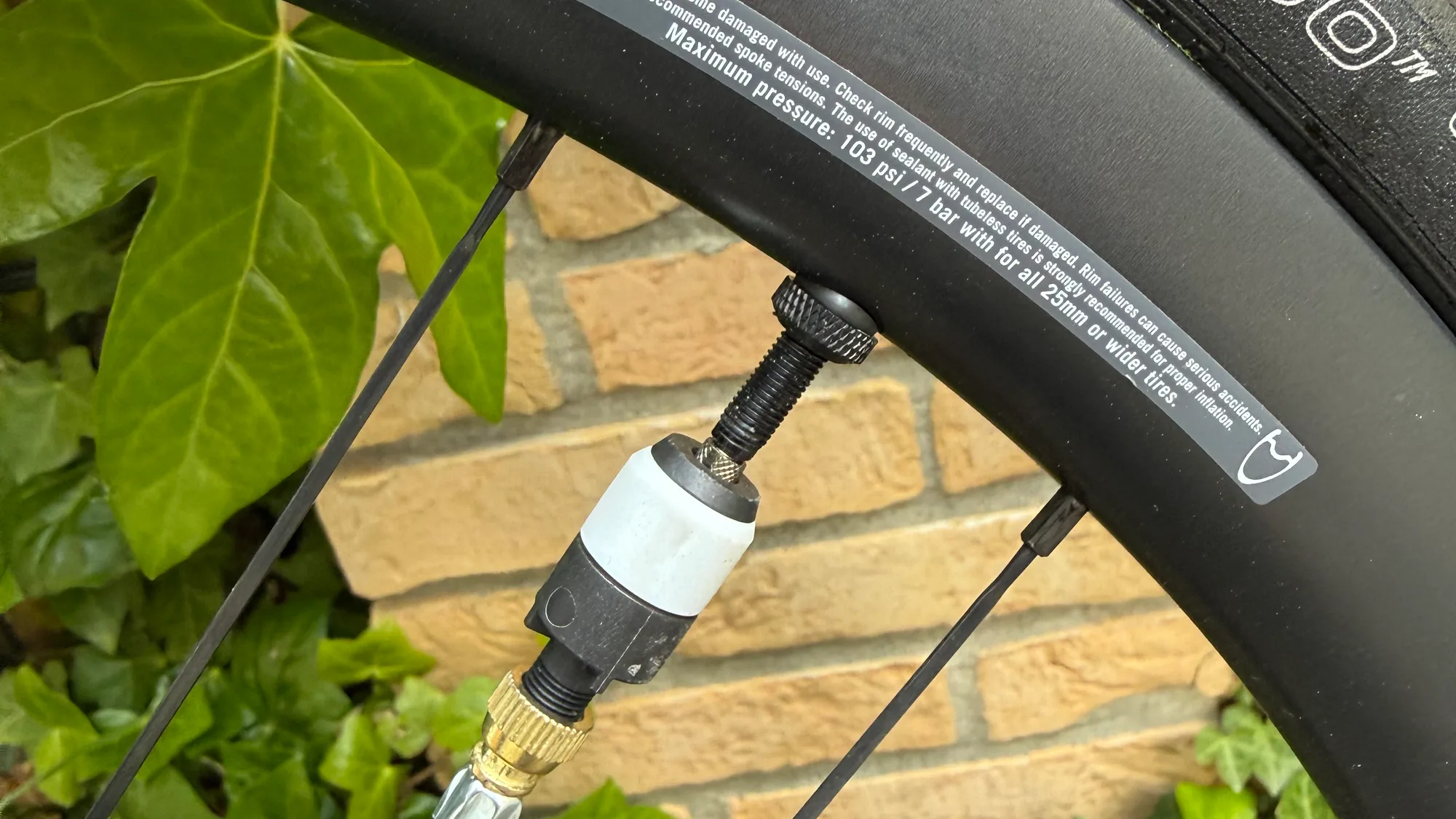
Three things changed about tire pressure: better calculators, a real Presta challenger in Clik valves, and 100-gram electric pumps. The new state of play.

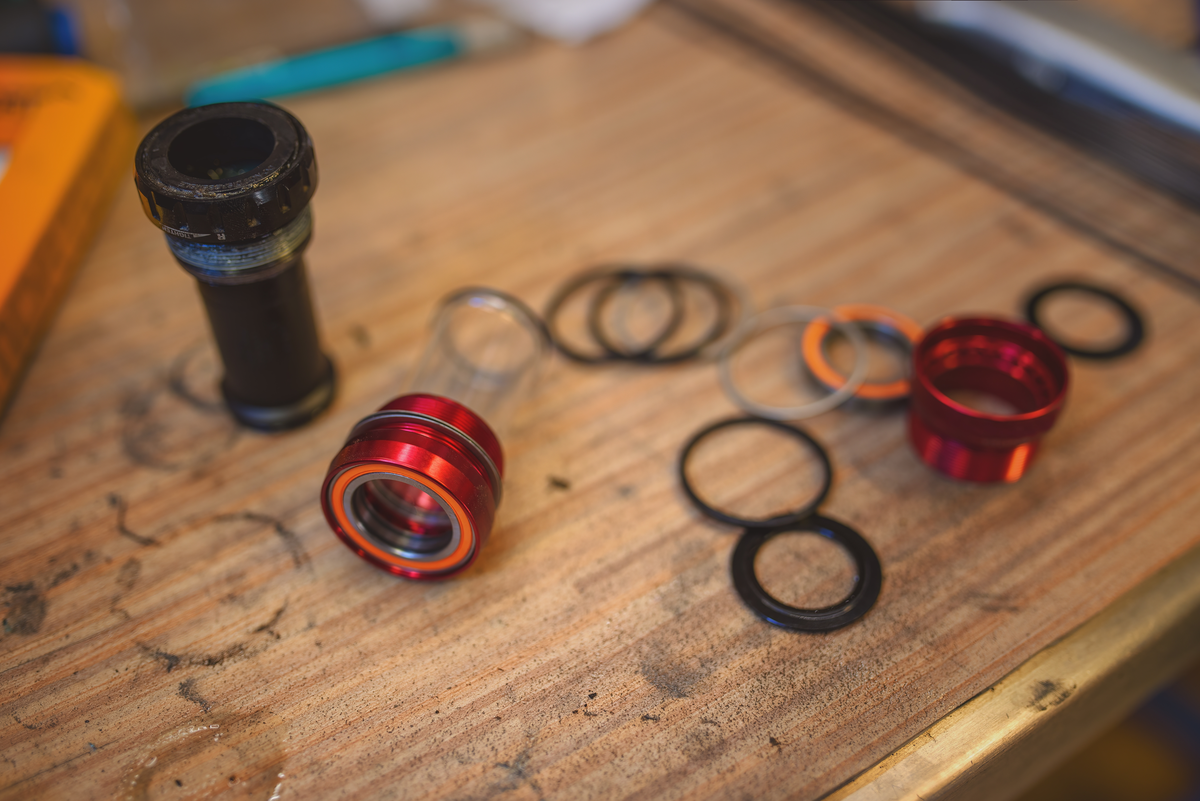
The bottom bracket is the #1 creak suspect. Whether to regrease, replace the cartridge, or replace the interface depends on your ride — here are the rules.

Most riders attack the loudest suspect and replace the wrong part. Binary-search a creak by position and cadence — narrow the bike in half before unbolting.

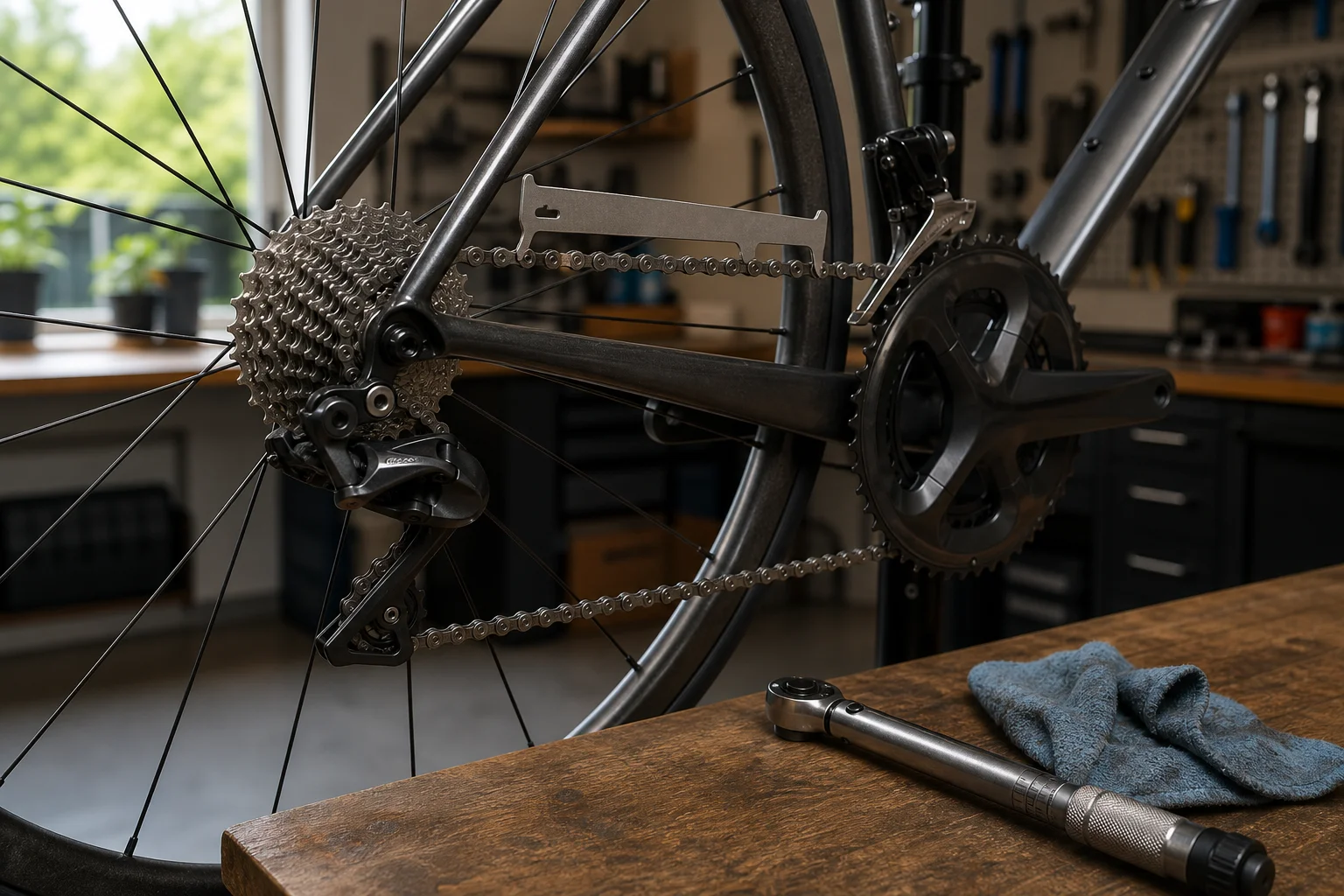
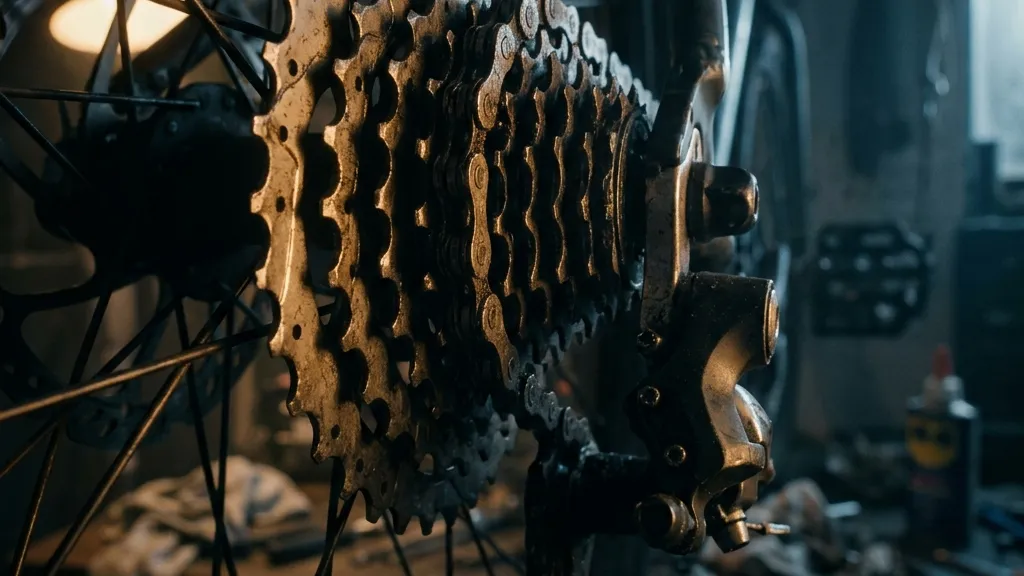
A cassette can outlast 2–4 chains — but only if you catch the chain at 0.5%. The wear math, the new-chain skip test, and when chainrings are done too.

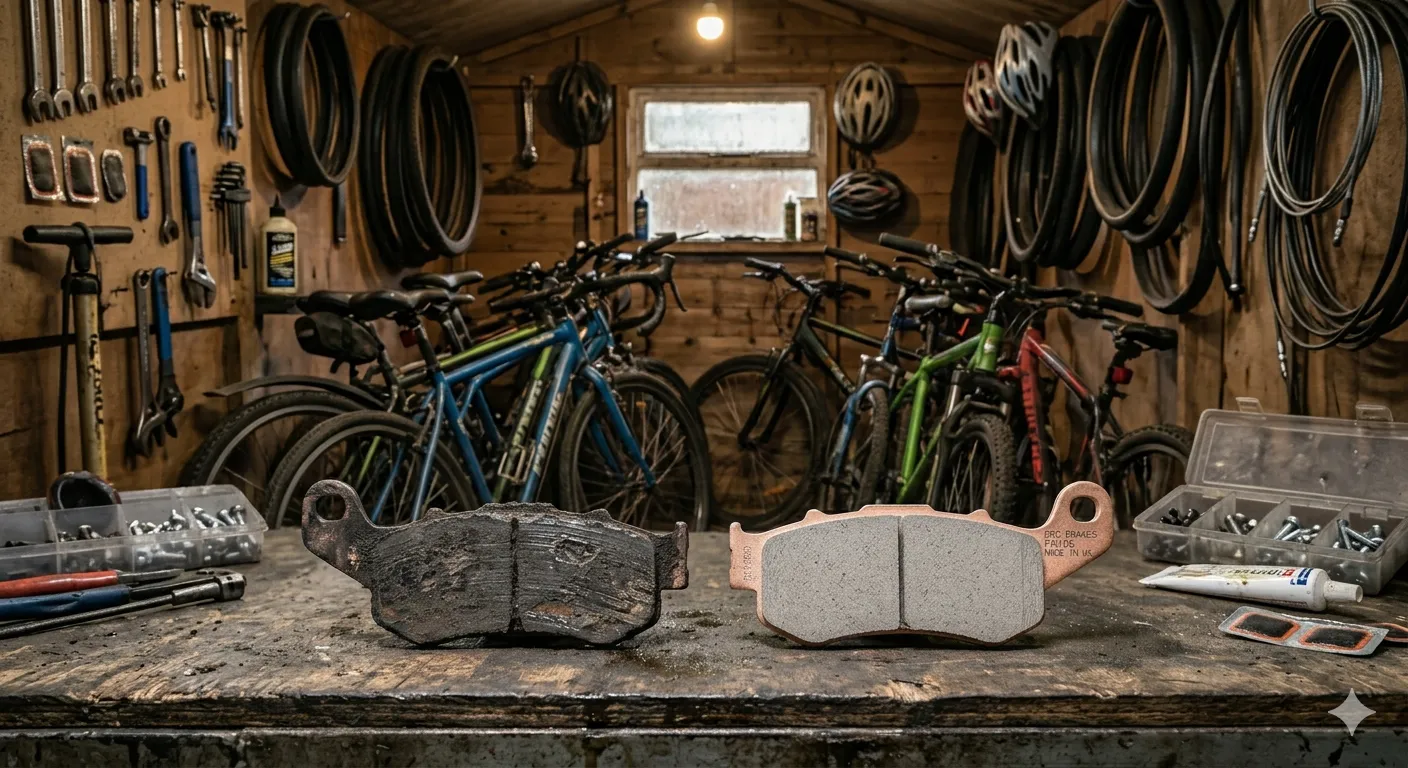
Worn pads don't fail dramatically — they fade. What happens as they wear, the numbers manufacturers use, and how to stop guessing when it's time to swap.

How long do bike tires last? The visual warning signs your road, gravel, or MTB tires need replacing — plus distance guidelines, age limits, and tracking.

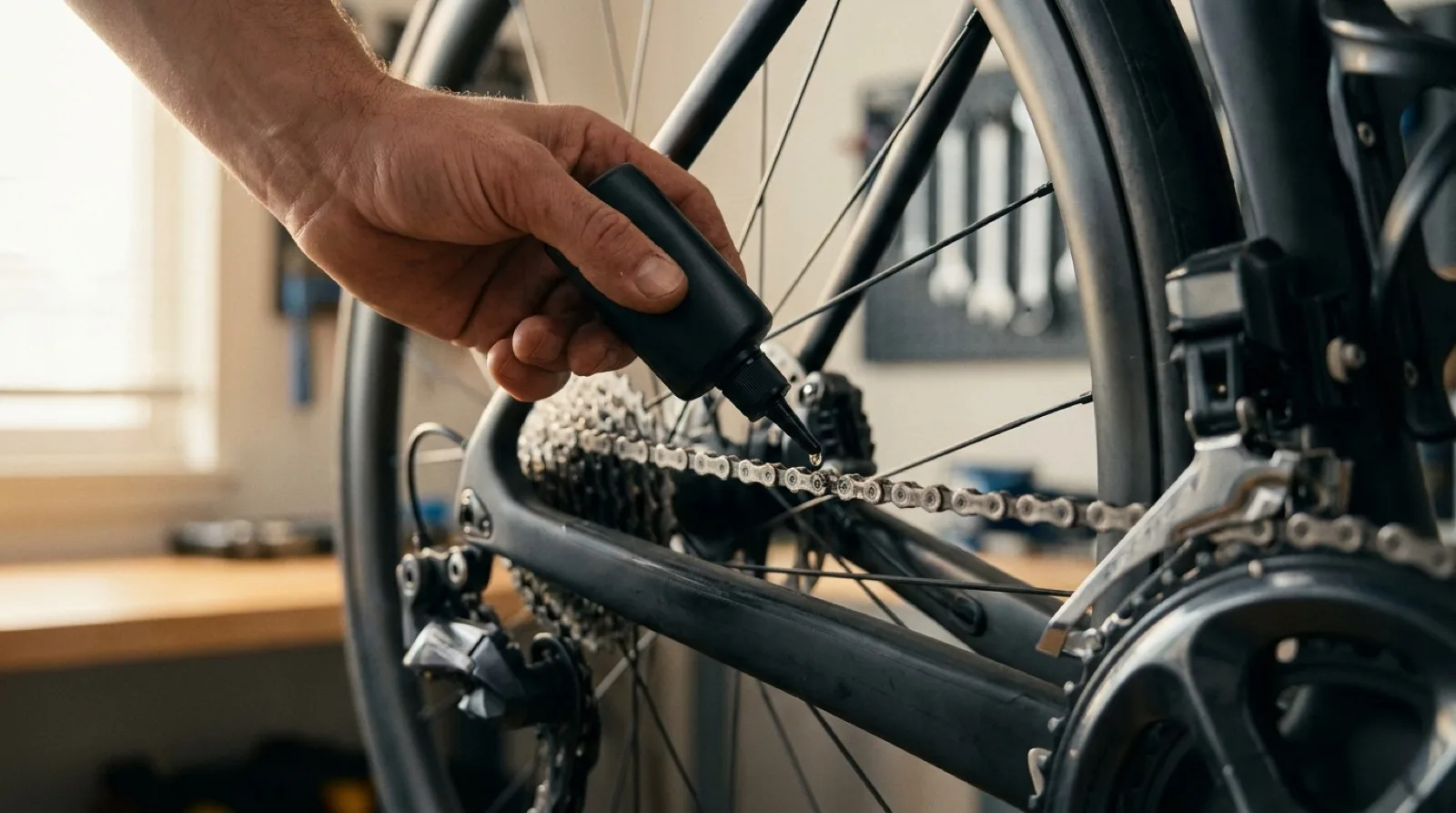
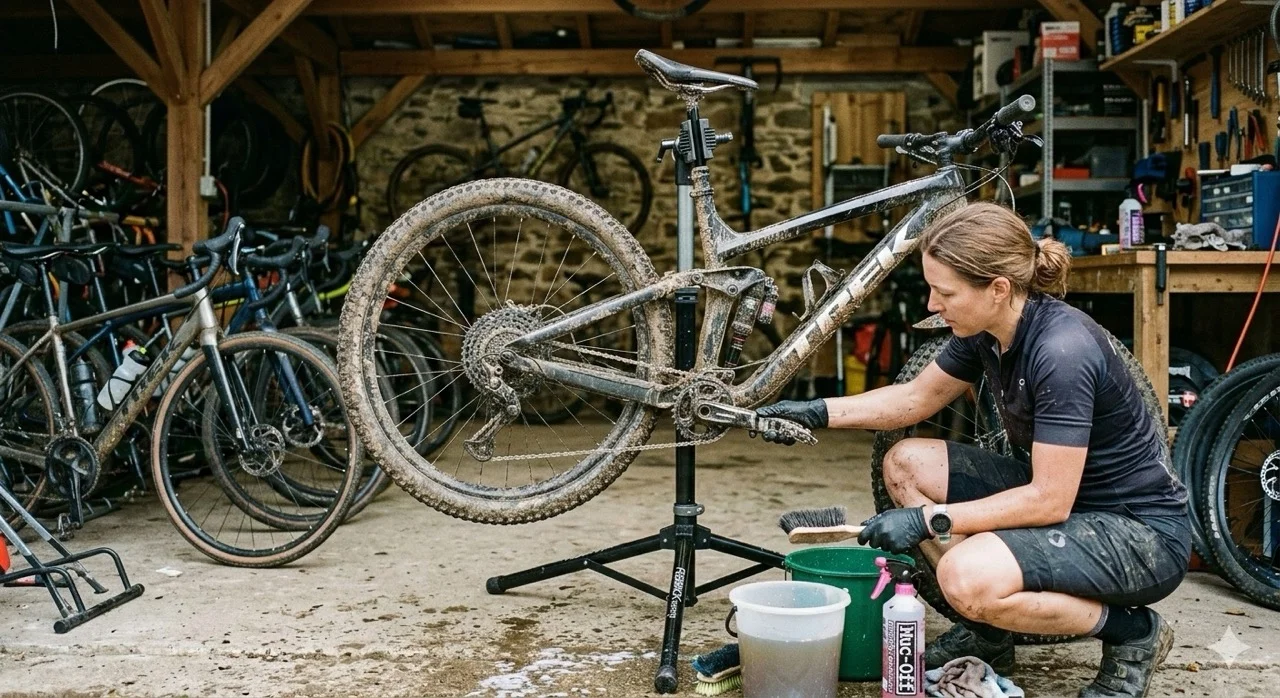
Your chain silently costs you watts and money. The science of chain wear, how to replace one yourself, when the cassette goes too, and how lube changes it.

Most cyclists spend hundreds upgrading each season. The bigger gains come from looking after the parts you own — two simple habits that save real money.

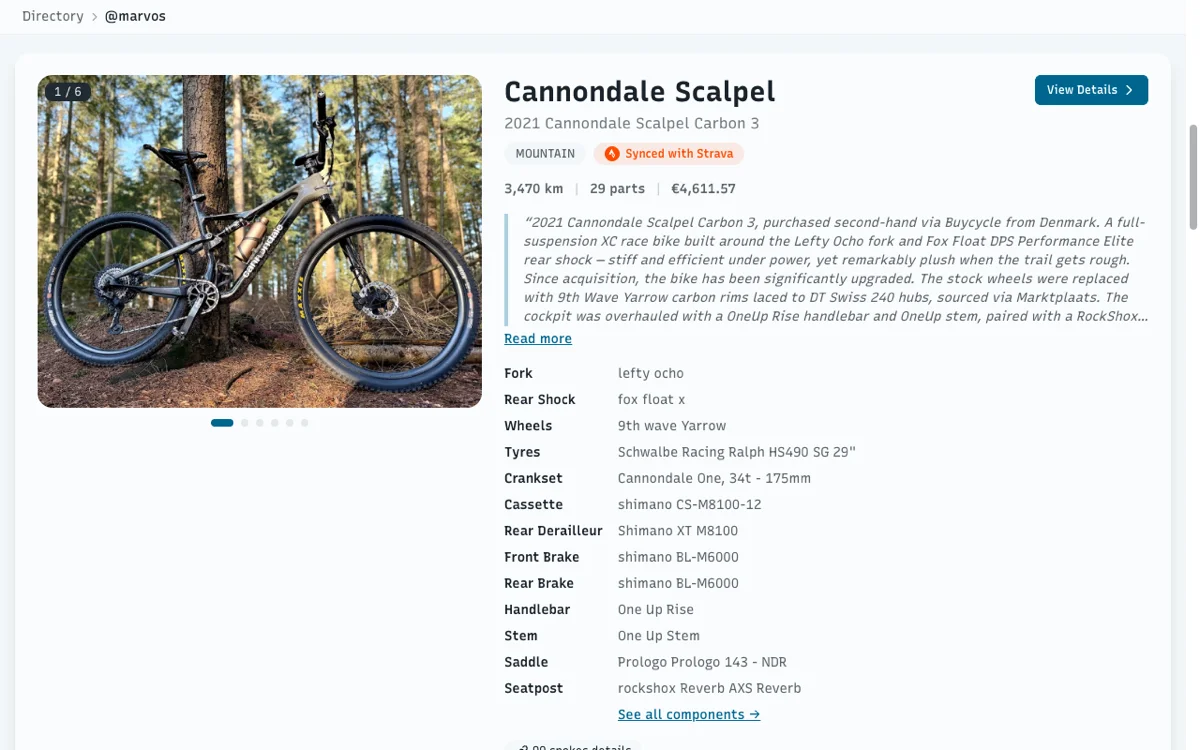
How to create dedicated profile pages for your bike collection — document what you own, track component details, and share your builds from one place.

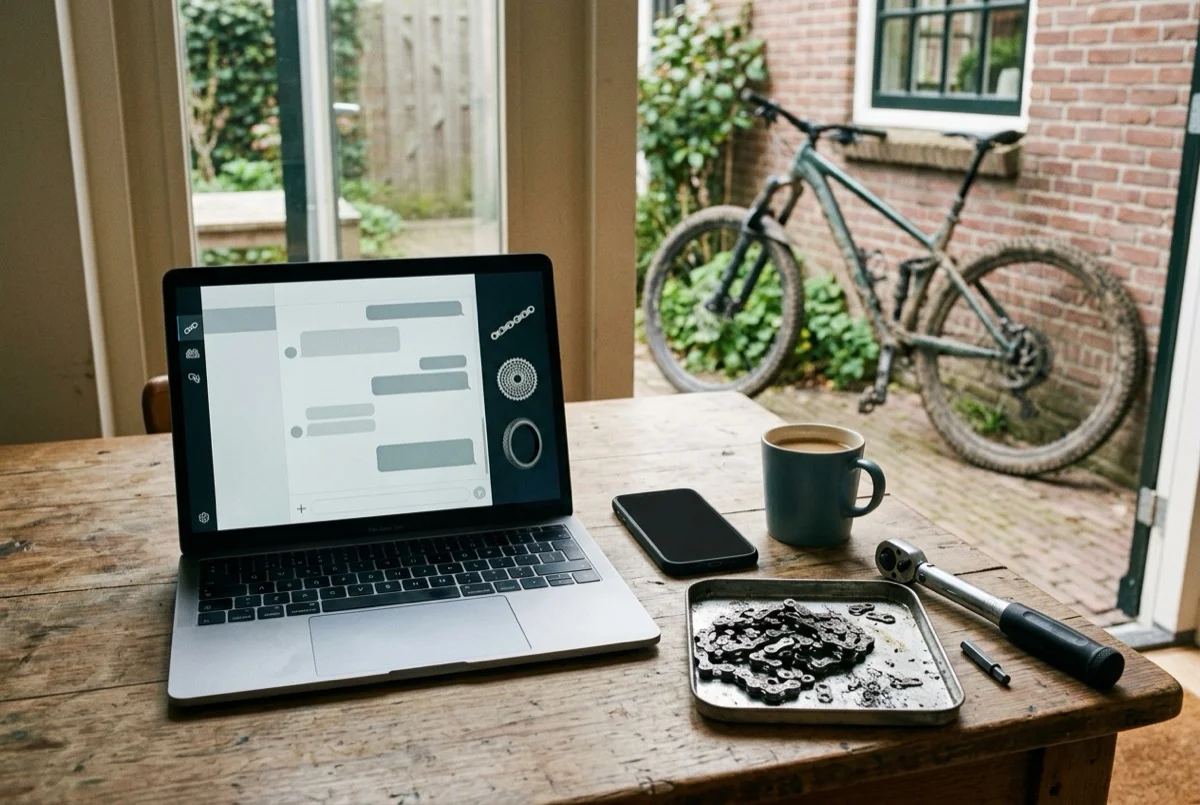
Step-by-step: connect Claude, ChatGPT, or Gemini to WatchMy.Bike via MCP and manage maintenance, components, and service intervals through conversation.

The three numbers to log per component, which clock each part wears on, how to set intervals you'll keep, and how to run one system across four bikes without it collapsing.

How to create and share public bike profiles on WatchMy.Bike. Get shareable links, rich previews, and a permanent place to showcase your builds.
Track every component and showcase your builds to the world
Already have an account? Login