The Arithmetic of Neglect: How a €40 Bike Repair Becomes a €400 One

•6 min read
Quick answer: A tracked, preventive maintenance budget for a 4,000 km/year rider runs roughly €150-300 per year in parts and consumables. Run-to-failure looks cheaper — until a skipped €30-50 chain becomes a €150-400 drivetrain, skipped €15-25 pads score €50-120 of rotors, and a dry bottom bracket seizes into the frame. Neglect doesn't avoid bike repair costs; it batches them, with interest.
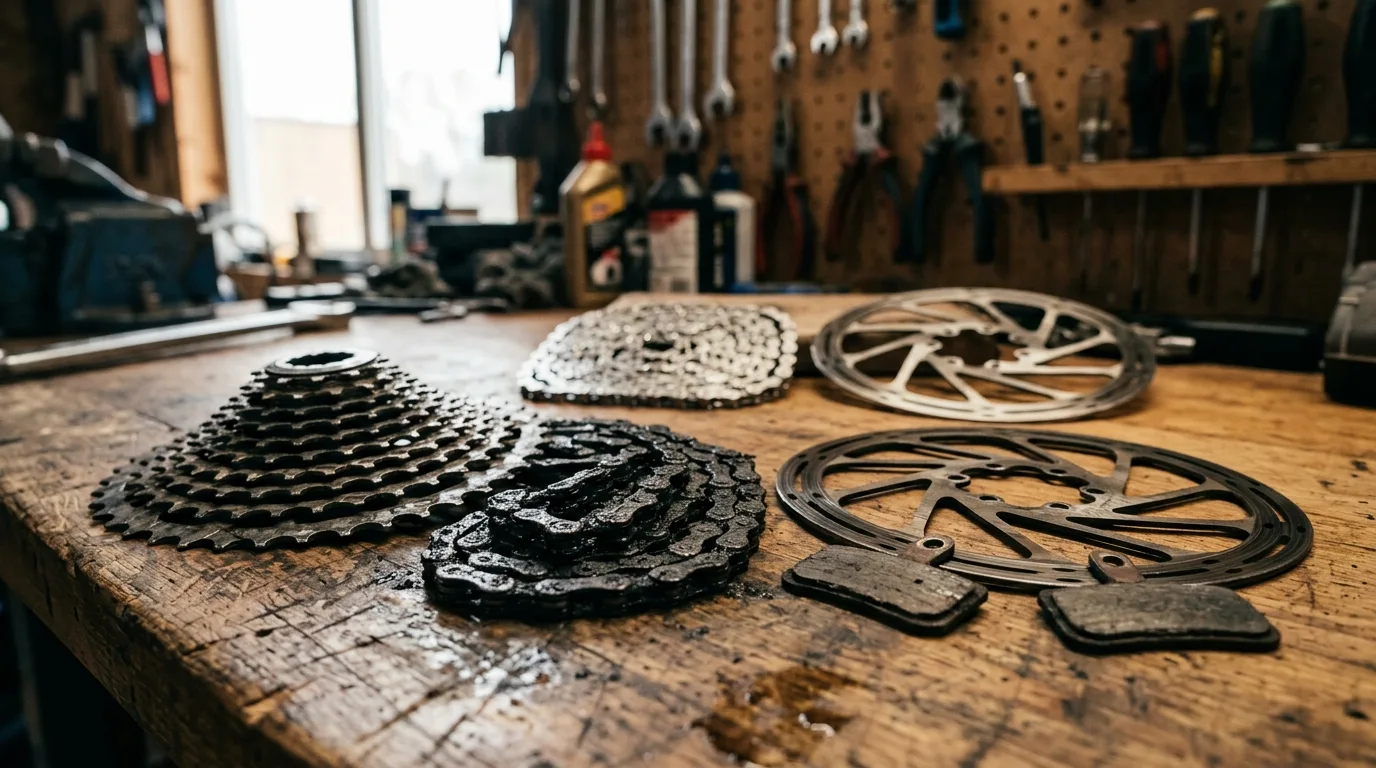
The most expensive part on your bike is rarely the one that failed first. It's the one the failed part took down with it. A chain doesn't just wear out — worn past a threshold, it re-cuts the cassette and chainrings to match its stretched pitch. Worn-out pads don't just stop braking — the backing plate machines grooves into the rotor. By the time you hear the problem, you're no longer paying for the part. You're paying for the cascade.
Shops see this arithmetic daily. Riders mostly see it once, on one invoice, and call it bad luck.
I'll say it: preventive maintenance isn't cheaper per year — it's cheaper per kilometre. In any single season, the rider who skips everything spends less than the rider who replaces chains and pads on schedule. The bill just arrives later, as a full drivetrain, a scored rotor pair, or a resale discount when the buyer spins the cranks and hears gravel. The honest comparison isn't €/year. It's €/km over the life of the bike — and neglect loses that one every time.
Cascade 1: The Chain That Ate the Drivetrain
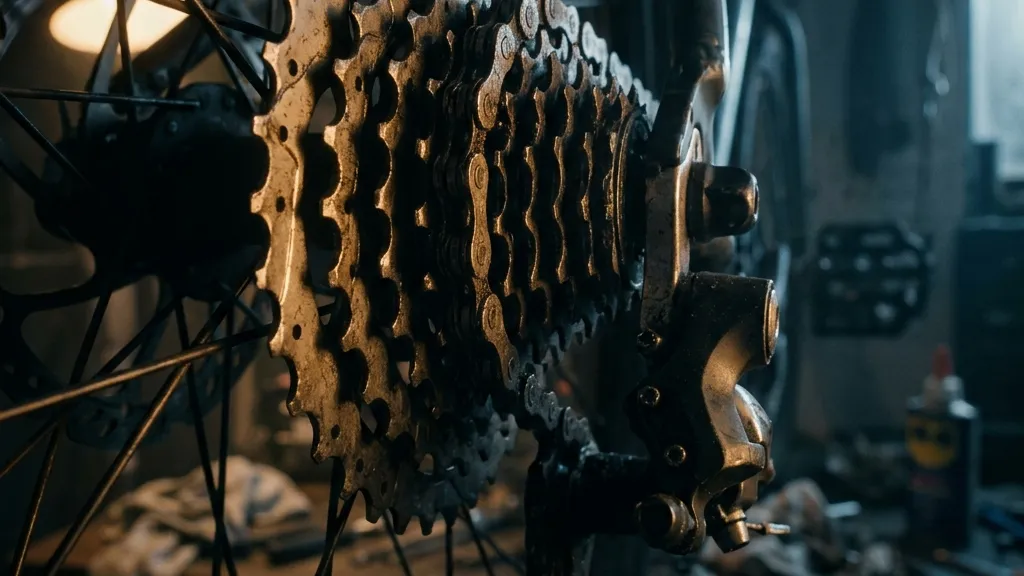
Chain wear is measured as elongation. At 0.5% (11/12-speed), you replace the chain and nothing else. Past 0.75%, the stretched chain has re-shaped the cassette teeth; a new chain will skip on the old cassette, so both go — and if the chainring teeth are hooked, those too.
| You replace... | Typical EU cost (mid-range road/gravel) |
|---|---|
| Chain on time (at 0.5%) | €30-50 |
| Chain + cassette (past 0.75%) | €90-180 |
| Chain + cassette + chainrings (run to failure) | €150-400 |
A cassette survives 2-3 chains when you replace them on time; run one chain into the ground and everything wears together. The thresholds and how to measure them are in Cassette and Chainrings: When to Replace — the measuring tool itself costs €10–20 and pays for itself the first time it's right.
Cascade 2: The Pads That Scored the Rotors
Disc pads are done below 3 mm including the backing plate. Ride past that and the plate contacts the rotor — steel on steel — carving grooves that no new pad will bed into properly.
| You replace... | Typical EU cost |
|---|---|
| Pads on time | €15-25 per calliper |
| Pads + one scored rotor | €50-90 |
| Pads + both rotors + shop bleed | €100-200 |
The fluid side compounds it: old DOT fluid absorbs water, the boiling point drops, and braking degrades exactly when you're working the brakes hardest. A yearly bleed is cheap insurance — the chemistry is in the brake fluid guide, and pad thresholds in Brake Pads: When to Replace.
Cascade 3: The Bearings Nobody Checked
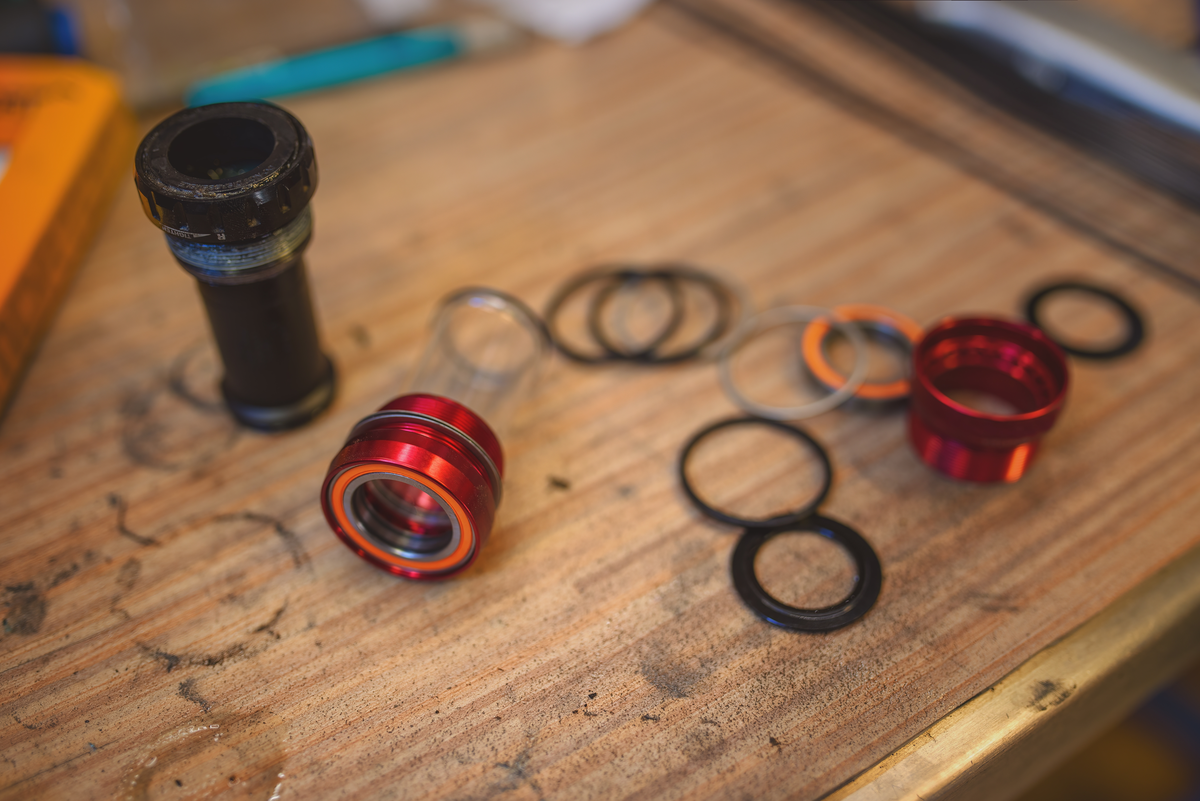
Bottom brackets and headsets have no wear indicator and announce failure late — a creak, then grinding, then a bearing that's welded itself to its seat with corrosion. A threaded bottom bracket is a €20-50 part. A seized one is that part plus serious extraction labour, and on press-fit frames the removal can damage the bearing seat in the frame itself — the one component you can't buy at the parts counter.
The service-or-replace decision tree is in Bottom Brackets: Service or Replace. The short version: a ten-minute annual check (drop the chain, spin the spindle, feel for grit) is the entire preventive programme for a part whose failure mode is measured in frame damage.
Run the Annual Numbers: 4,000 km/Year
Here's the two-year picture for a mid-range disc road bike ridden 4,000 km/year in mixed weather:
| Cost line | Tracked & preventive | Run-to-failure |
|---|---|---|
| Year 1: chains (1-2), pads, consumables | €100-180 | €20-40 (lube only) |
| Year 2: same, + cassette amortised | €130-220 | €0 planned |
| Year 2: the cascade bill | — | €300-700 (drivetrain + rotors + labour) |
| Two-year total | €230-400 | €320-740 |
| Resale story | Service history | "Needs some work" |
The run-to-failure column wins year one. That's the trap — the season where nothing breaks feels like money saved. Per kilometre over two years, the tracked bike is cheaper, and that's before the resale gap, which routinely exceeds every number in the table. Full component lifespans for the amortisation maths are in the lifespan chart, and if you want the habit side of keeping parts alive longer, cleaning and tracking is the companion piece to this one — this post is the invoice; that one is how to shrink it.
One of mine, since I'd rather show a real number than a range. On 4 January 2025 I bought a Shimano CN-M8100 XT chain for my Cannondale Scalpel: €36.95, plus €10.95 for the SM-CN910-12 quick link, €47.90 collected at the counter. I fitted it on 1 February and logged it as a component that day. It sits at 2,190 km now against a 3,200 km service limit — 68% used, 1,010 km left.
That last figure is the one doing the work. I'm not judging this chain by ear, and I'm not going to find out it was finished by feeling the cassette skip under load on a climb. It gets replaced on a number, which is the difference between spending €36.95 again and buying the cassette-and-chainrings line from the table above.
How WatchMy.Bike Makes This Automatic
Every cascade above starts with a threshold nobody was watching. WatchMy.bike watches them: Strava sync keeps per-component kilometres current, and on paid plans the cost tracking shows each part's cost per kilometre — which is the €/km comparison from this post, computed live from your own bikes instead of my table.
Three alerts that block the three cascades:
- "Measure chain wear" — recurring every 1,000 km
- "Check pad thickness" — recurring every 1,500 km
- "Pull and inspect BB + headset" — recurring every 12 months
Set up your first maintenance alert →
Questions about your maintenance budget? Reach out at marien@WatchMy.Bike.