Is Chain Waxing Worth It? A Sceptic Sets Up a Wax Pot

•19 min read
Quick answer: Hot-melt (immersion) waxing gives the lowest drivetrain friction and the longest chain life of any lubricant — roughly 2–6 W saved at 250 W against most drip lubes, and a chain life measured in tens of thousands of kilometres rather than thousands. You pay for it with a one-off strip-down of every chain, about €100 of kit, and a re-wax every 300 km — immediately after any wet ride, not whenever you get round to it. It is worth it if you will keep the schedule. It is worse than a good wet lube if you will not.
To wax or not to wax. I don't know when that question moved into my head, but it has been there for a while, and I doubt I'm the only one. For a long time my answer was "never". What is wrong with lubing the chain and cleaning it every now and then? It works, it has always worked, and it never needed a pot.
Then I watched a few videos, starting with a mechanic's verdict on wax versus oil, and the pitch started to land: strip the chain once, dip it in melted wax, and the black paste never comes back. Fewer watts, a cassette that lasts longer, a chain you can touch with clean hands. What moved me from "never" to "why not" was not the pitch, though. It was my own riding, which I get to below.
Whether chain waxing is worth it turns out to depend almost entirely on one number, and it is not a number about wax.
I'll say it: the watts are the worst reason to wax. A few saved watts is a rounding error for anyone who is not on a start line, and leading with it is why waxing reads as a racer's affectation. The real argument is that wax does not carry grit into the rollers, so the chain and everything it touches wears slower — and that argument holds just as well at 25 km/h as at 45.
What "Waxing" Actually Means (Two Different Commitments)
Two things share the name and they are not the same commitment.
Drip wax is a wax carried in a liquid that evaporates. You apply it like any lube, on the bike, in a minute. It is cleaner than oil and slower than hot wax, and it still wants a clean chain to bond to.
Immersion, or hot-melt, wax means removing the chain, dipping it in molten paraffin, and letting it set. The wax gets inside the rollers, which is where the wear happens, and sets hard. This is the version with the friction and wear numbers, and the version with the slow cooker.
If you have never waxed anything, drip wax is the honest first step and the one I would recommend to anyone who suspects they will not keep a schedule. Chain Maintenance 101 covers where each lube type fits. This post is about the other one.
The Numbers That Made Me Reconsider
Zero Friction Cycling, the Australian lab that has tested more chain lubes than anyone, puts a waxed chain at 2 to 6 W better than most drip lubes at 250 W. The same lab warns that efficiency numbers are "all over the place from one lab to another", which is fair: a spread that wide is the honest answer.
Friction is the headline and the least interesting number. This is the one that matters:
| Re-wax every | Average chain life (ZFC) |
|---|---|
| 150–200 km | 20,000–25,000 km |
| 300 km | ~15,000 km |
| 400–500 km | 8,000–10,000 km |
Those are ZFC's averages for the chains it sells, not a guarantee for yours. Read them as a sliding scale rather than a promise. The point is not the top number, it is the shape: chain life is a function of how disciplined you are, not of which bag of wax you bought. A waxed chain re-waxed late is not a waxed chain; it is a dry chain with good intentions.
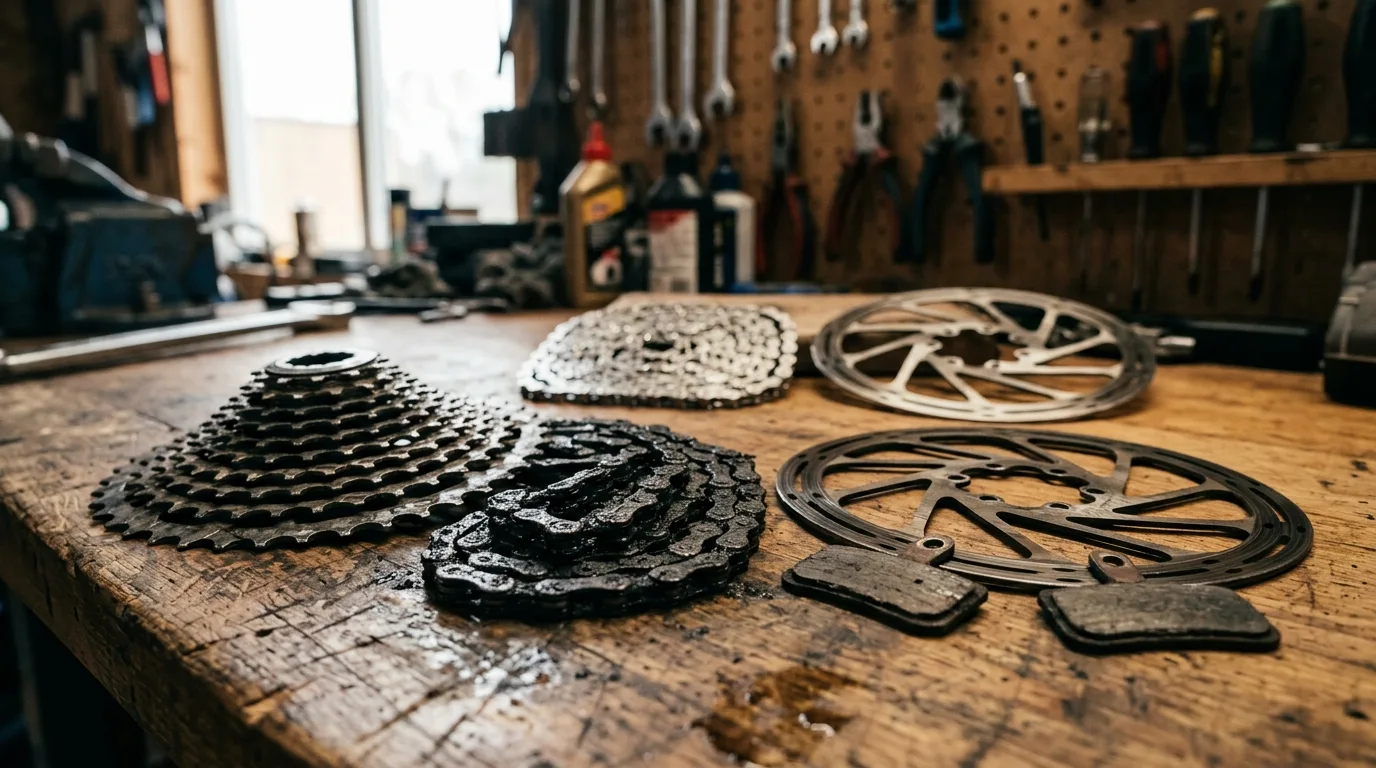
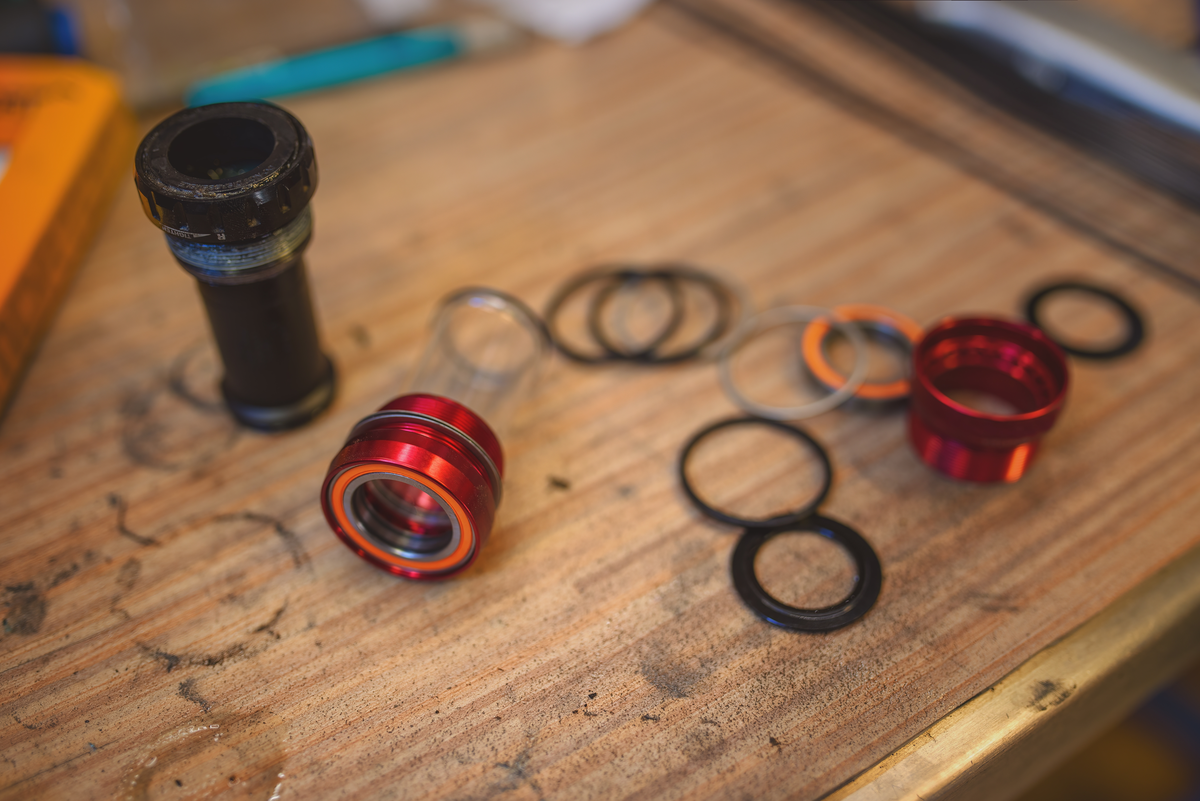
For context, a typical 11-speed chain on wet lube reaches the 0.5% wear mark somewhere around 2,000–3,000 km, with a spread wide enough that the average is close to useless — the full picture is in how long bike parts actually last.
The Real Cost: The Strip, the Kit, the Tuesday Night
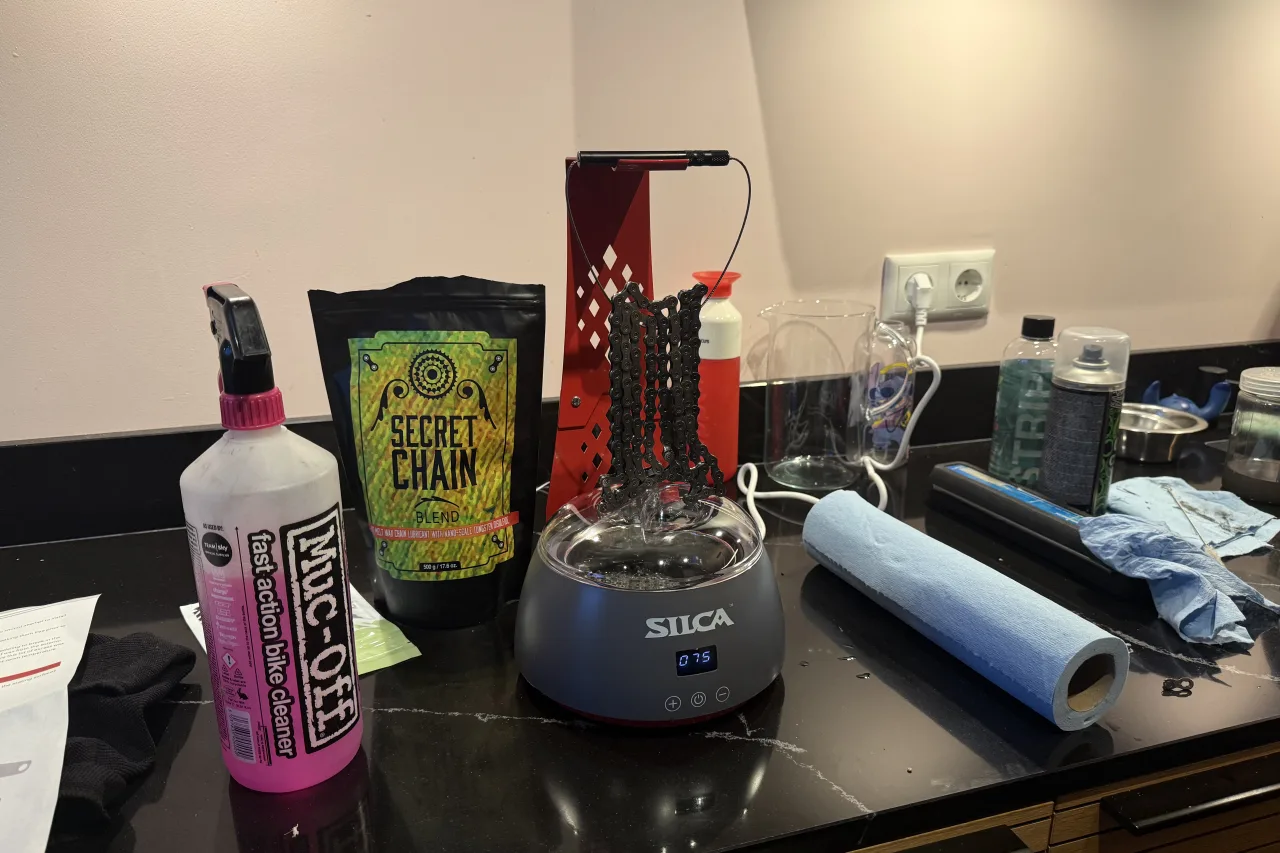
The money is the easy part. Here is what I ordered from Silca on 21 September 2026, one invoice:
| Item | List price | What I paid |
|---|---|---|
| Silca Chain Waxing System (the pot, EU plug) | €119,00 | €95,20 |
| Silca Secret Chain Blend hot-melt wax | €48,00 | €38,40 |
| Silca Chain Stripper, 16 oz | €44,00 | €35,20 |
| Silca StripChip | €29,00 | €23,20 |
| Total | €240,00 | €192,00, free shipping |
The 20% came from my Escape Collective membership, which happened to include a Silca discount that month. Without it, the branded route is €240. The cheap route is a supermarket slow cooker (a 1.5 L one is around €22–32), a 500 g bag of wax (€45–50 for Silca's) and some solvent, which lands closer to €100. I went branded on purpose: if the verdict is "not worth it", I want to have ruled out the kit as the reason.
Still to budget: spare quick links (Shimano and SRAM's 12-speed links are officially single-use; KMC and YBN make reusable ones) and a second and third chain (€30–60 each), optional and the thing that makes the whole system work.
Either way, the money is one cassette. That is not the cost.
The cost is the first strip. A new chain arrives packed in a sticky factory grease that is a shipping preservative, not a lubricant, and wax will not bond through it. Molten Speed Wax's method is three baths in odourless mineral spirits, shaking hard, changing the solvent each time and repeating until it runs clear, then two baths in denatured alcohol (methylated spirits) to take off the film. The chain should come out dry, metallic and rattly.
That is an hour you will only spend once per chain, and it is the step where most people quit.
Silca sells a shortcut for exactly this step, and it is the reason a €29 StripChip is on my invoice: you drop the chip into the molten wax with the new chain, and Silca's claim is that it binds with the factory grease and turns it into wax, so no solvent is needed. One chip per chain, 10 minutes at 125 °C, then 10 more at 75 °C. I used it on the new Synapse chain and followed the instructions to the letter; the chain came out of the pot waxed and went straight on the bike. Whether the wax bonded as well as it would after a solvent strip is something only the first re-wax interval can answer.
The waxing itself is dull by comparison. Silca's instructions are to melt the wax at 75 °C and leave the chain submerged for 10 minutes; hang it up to set, then work each link loose before fitting. Other brands run hotter, but nobody asks for more than 100 °C.
Never mix the two systems. Oil on a waxed chain, or wax over an oiled chain, makes a grey paste that holds grit and bonds to nothing. If you re-oil, that chain needs the full strip again before it goes back in the pot.
That does not mean the oil goes in the bin. Mine is a collection built up over years, and it still does a job on the kids' bikes and my city bike. It just never goes near a waxed chain again.
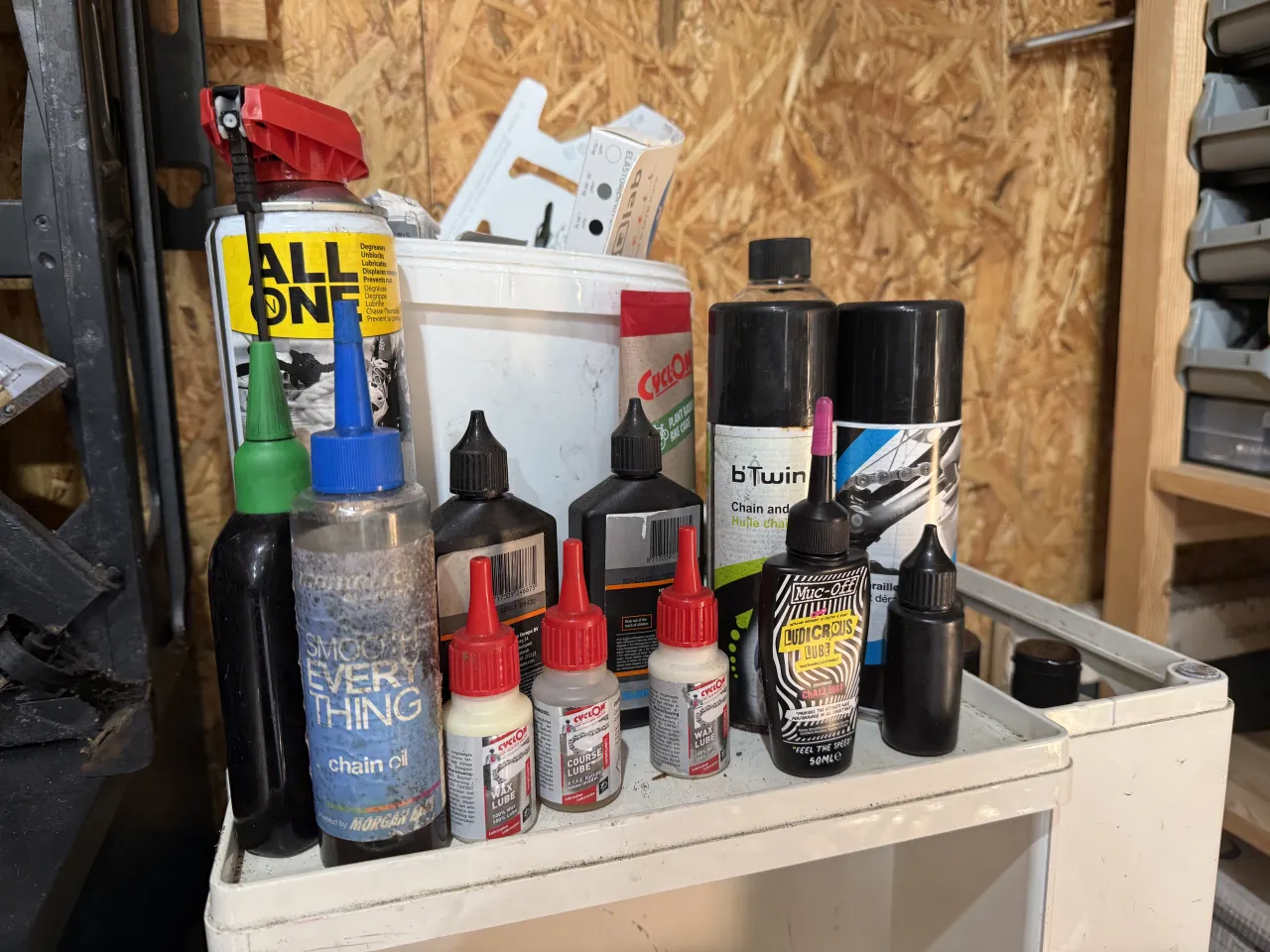
The oil collection. It stays, for every bike that isn't waxed.
Five Ways to Waste the Whole Effort
GCN Tech put a number on the failure modes in The 5 Biggest Chain Waxing Mistakes, and what strikes me about the list is that four of the five happen at the workbench, not on the ride. Waxing does not fail gradually the way a lube does. It either bonded or it did not.
1. Not degreasing properly. The one everybody underestimates, and the reason the first strip deserves an hour rather than ten minutes. Wax bonds to bare metal; it cannot bond through a film. Keep going until the solvent runs clear and the chain comes out dry, metallic and rattly. A chain that still looks faintly wet is a chain that will shed its wax in 50 km.
2. Getting the temperature wrong. Too cool and the wax never penetrates the rollers, so you have coated the outside of a chain and lubricated nothing. Too hot and you damage the wax and create a fire risk. Brands range from about 65 to 100 °C (Silca asks for 75 °C, ZFC says 70–100 °C), and a thermometer costs less than a chain. Cheap slow cookers on "low" can run hotter than their label suggests.
3. Waxing the quick link. Silca's own instructions say not to, "to ensure a smooth installation": leave the link out of the pot and fit it clean.
4. Not checking chain wear. This is the trap I expect to fall into, and the one that costs real money. A waxed chain looks immaculate at 4,000 km. Clean is not the same as unworn, and the whole argument for waxing is that the chain lasts longer, which is a claim you can only settle with a gauge. If the chain is quietly past 0.5% it is eating the cassette while looking perfect. Measuring is the only honest check — see automatic chain wear monitoring.
5. Not agitating the wax. The chain has to be moved through the wax rather than parked in it, so the wax reaches the rollers instead of glazing the plates. There is a second reason: the friction additives in most hot waxes (tungsten disulfide in Silca's blend) settle. Molten Speed Wax says to agitate aggressively to mix them back in.
Four of those five are process, and process is learnable in one evening. The fifth is a habit, and habits are the thing that actually decide whether this works.
The Catch Is the Calendar, Not the Wax
Every waxing guide buries this. Around 300 km, the wax is done, and a wax that is done gives you no warning smell, no black streak, nothing visible — the chain just sounds a little dry and starts wearing like an unlubricated one. ZFC says re-wax by about 300 km on the road (6–8 hours off-road); Silca says up to 300 miles for its blend, which I would treat as the ceiling rather than the target.
And a wet ride ends the interval immediately, whatever the odometer says. Water flushes the wax out and the rollers are high-carbon steel, which oxidises fast. ZFC's wording is that the chain "should be wiped dry and put back into wax asap before any oxidisation occurs". You cannot leave the bike until the weekend.
This is where the multiple-chain trick stops being a luxury. Three chains, all waxed in one session, swapped in two minutes with a quick link, all re-waxed together when the last one is used. The batch turns a weekly chore into a monthly one, and it spreads wear evenly across the cassette. It is also €100 of chains before you know whether you like any of this.
Why Rain and an Indoor Trainer Change the Sum
Here is where my situation stopped matching the advice I was reading, and the reason I am trying this at all.
The standard verdict is that waxing suits dry climates and that wet-weather riders should stay on wet lube. That is sound if rain means you ride in it. I don't: in winter I mostly ride indoors, and outside my Synapse almost never sees a wet road. So the outdoor bike gets almost only dry days, and the wet-lube argument loses most of its force. The chain that would have been flushed out every third ride never gets flushed at all.
The indoor bike is its own case, and it is not the easy one people assume:
- No grit, no water, constant load. A trainer is the cleanest environment a drivetrain will ever see, and the one where a 300 km interval is purely a number on a screen rather than a weather event.
- Sweat is the problem instead. It is salty, it drips exactly onto the chain and the frame, and it corrodes. Wax sets hard and sheds it better than an oil film holds it, but nothing survives being left wet. A towel over the top tube and a wipe after the session matters more than the lube choice.
- Indoor kilometres are still kilometres. Structured intervals load the chain harder than a social ride with coasting. If your trainer rides do not reach your chain's service interval, the interval is wrong.
That last point is the one I keep running into, and it is a tracking problem before it is a lube problem.
Two Bikes Waxed in Two Days
The indoor bike went first, a Light Carbon on the trainer. I kept its existing chain: cleaned it, degreased it in Silca's Chain Stripper, dipped it, and refitted it. Two things nobody warned me about. Once the wax has set, the chain is stiff as a board, and you have to work every link loose before it will go round a cassette. And on the first few spins, flakes of wax drop off onto the floor. Put something down underneath.
The Synapse was the next day, and the timing was not a coincidence. Its chain and cassette were both at the end of their life: 2,491.5 km on the chain, 7,750 km on the cassette, both now retired in WatchMy.bike. So there was no old chain to strip. I bought a new cassette and two new chains, and the first chain went into the pot with the StripChip instead of the solvent baths.
Both bikes are now waxed and ready to ride. The Synapse's retired numbers are the baseline this experiment has to beat: 2,491.5 km is what a chain on oil gave me on that bike.
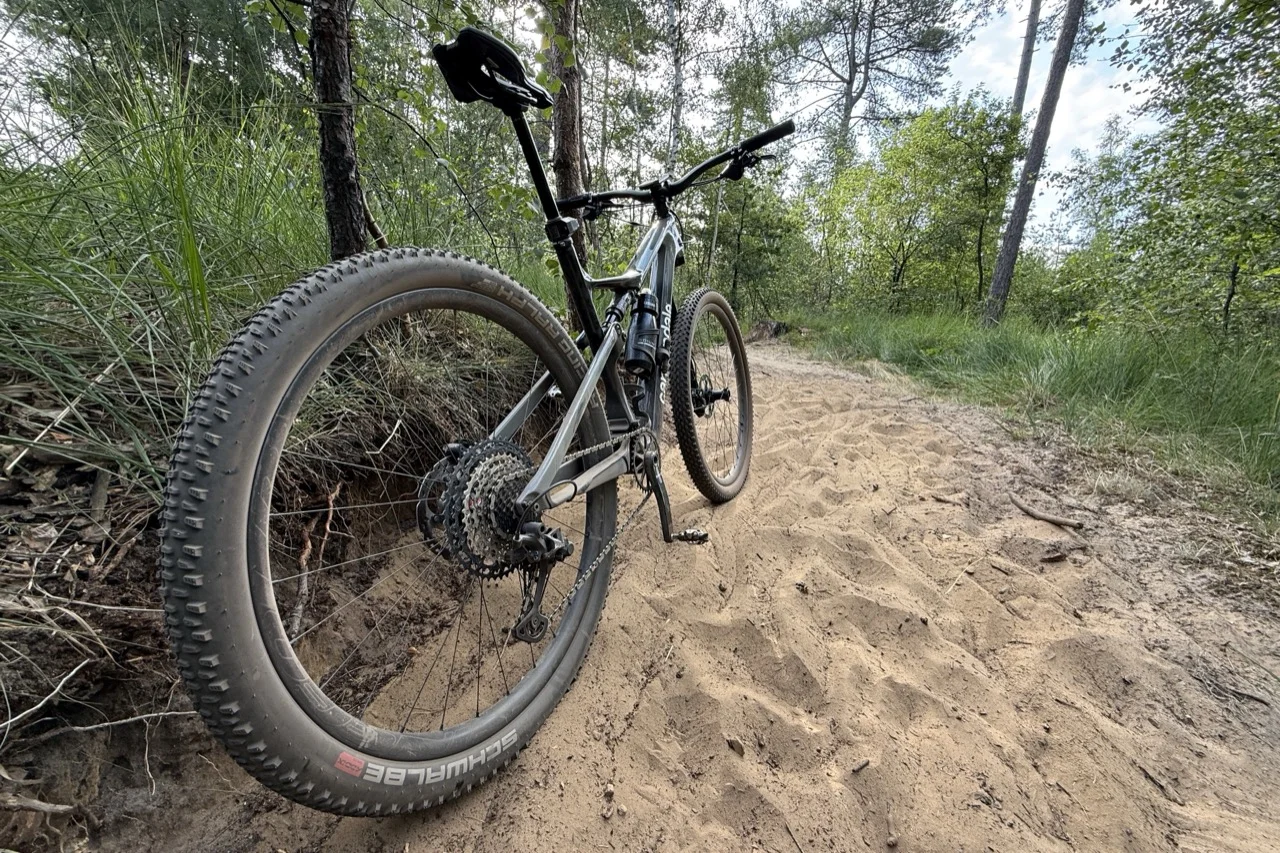
The one I have not decided on is the Scalpel. That is the mountain bike, and I ride it in wet and muddy conditions often, which is exactly where wax has the weakest case. Then again, I was sceptical about the whole wax system too, so we'll see how it goes.
What I'm Testing, and What Would Send Me Back to Oil
I am not going to write "waxing is better" at the end of a month of enthusiasm. Here is the test, set out before the answer, so it is a test and not a justification.
The protocol:
- The baseline is the Synapse's last oiled chain: retired at 2,491.5 km, with the cassette at 7,750 km. Same bike, same rider, same roads.
- A chain-wear measurement every 1,000 km on both waxed bikes, logged with the reading and the date, not "looks fine".
- Every re-wax logged: odometer, date, how long it took, whether it was triggered by distance or by a wet ride.
- The Scalpel stays on oil. It is not a control, the conditions are too different, but it keeps me honest about what oil costs in time.
What would make me call it:
- If the new Synapse chain reaches the same wear as the old one by around 2,500 km, the wear argument failed for me, the friction argument is academic, and the faff is not paid for.
- If I miss three re-wax intervals in a season, the honest conclusion is not that waxing failed. It is that I did not do it, and drip wax or a good wet lube beats a system I skip.
That second one is the real experiment. The performance case for hot wax is settled in the lab. The case that is not settled is whether an ordinary rider with a job keeps a 300 km schedule for a year — and that, not friction, is what decides whether chain waxing is worth it for you.
So far that is two bikes and zero re-waxes. I will update this post as the kilometres come in.
Who Should Not Bother
- If your chain is already dirty and you do not clean it. Wax on a contaminated chain is worse than oil on a contaminated chain. Fix the habit first.
- If you ride in the rain by choice, year round, and will not re-wax the same evening. A quality wet lube is the correct answer and there is no shame in it.
- If you only have one bike and no spare chain. A wax session with no spare means the bike is off the road for the evening. That gets old faster than black hands.
- If the appeal is the watts. Buy nothing. Ride more.
How WatchMy.Bike Makes This Automatic
Waxing is not hard. Remembering it is, because the thing that ends the interval is invisible: no black chain, no squeak until it is already late. That is exactly the kind of interval worth putting on a machine rather than in your head.
WatchMy.bike tracks distance per component from your Strava rides, so a re-wax alert fires on the chain's own kilometres rather than the bike's. Indoor hours count too, which is the case most people get wrong. And each re-wax you log becomes a record you can look back at: the interval you actually kept, not the one you intended.
Set up these alerts and forget about guessing:
- "Re-wax chain" — recurring every 300 km, per chain, so a rotation keeps its own counters
- "Measure chain wear" — recurring every 1,000 km; measure, log the number, and let the history tell you the wear rate. The case for measuring rather than replacing on a schedule is in automatic chain wear monitoring
- "Wipe down after indoor sessions" — recurring by riding time, every 10 hours, for the sweat that no lube protects against
Set up your first maintenance alert →
Waxing, or talking me out of it? Reach out at marien@WatchMy.Bike.